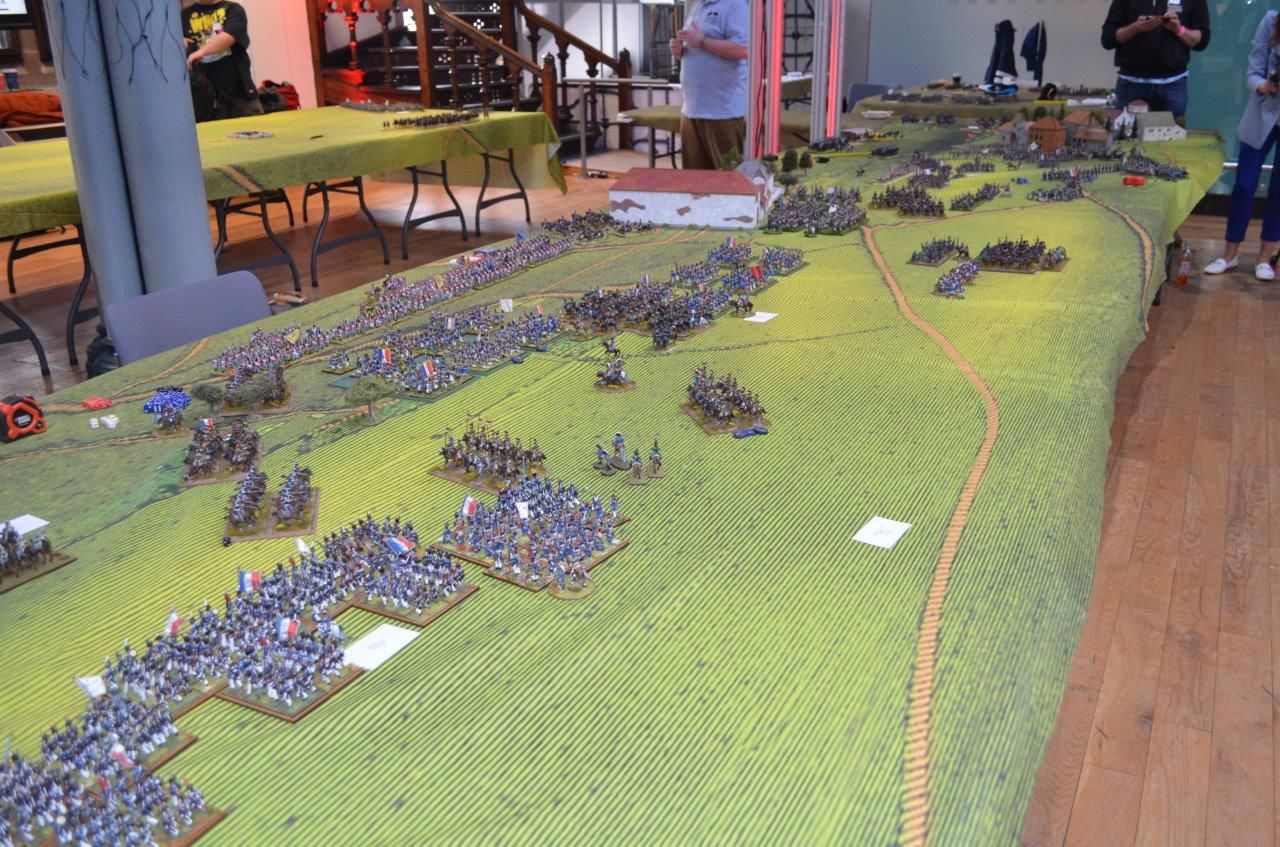
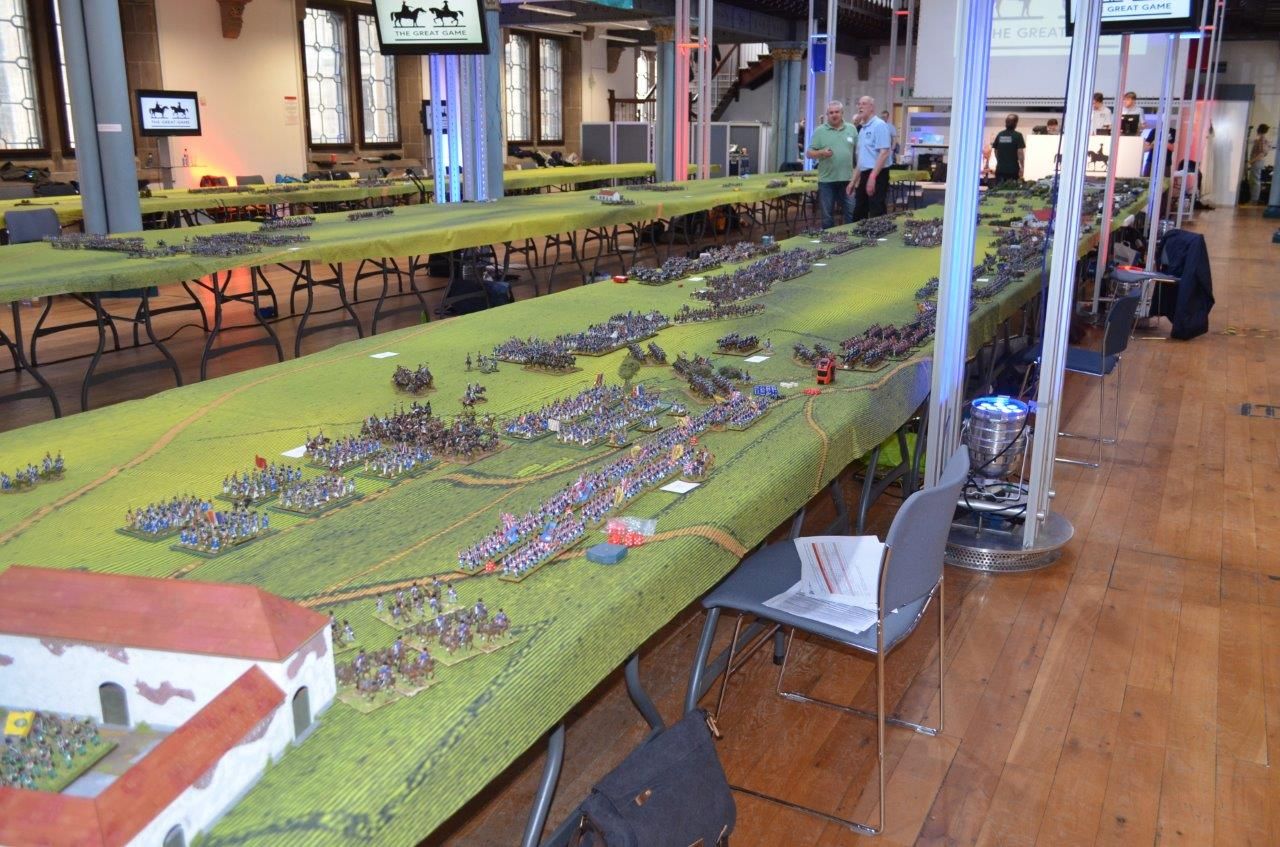
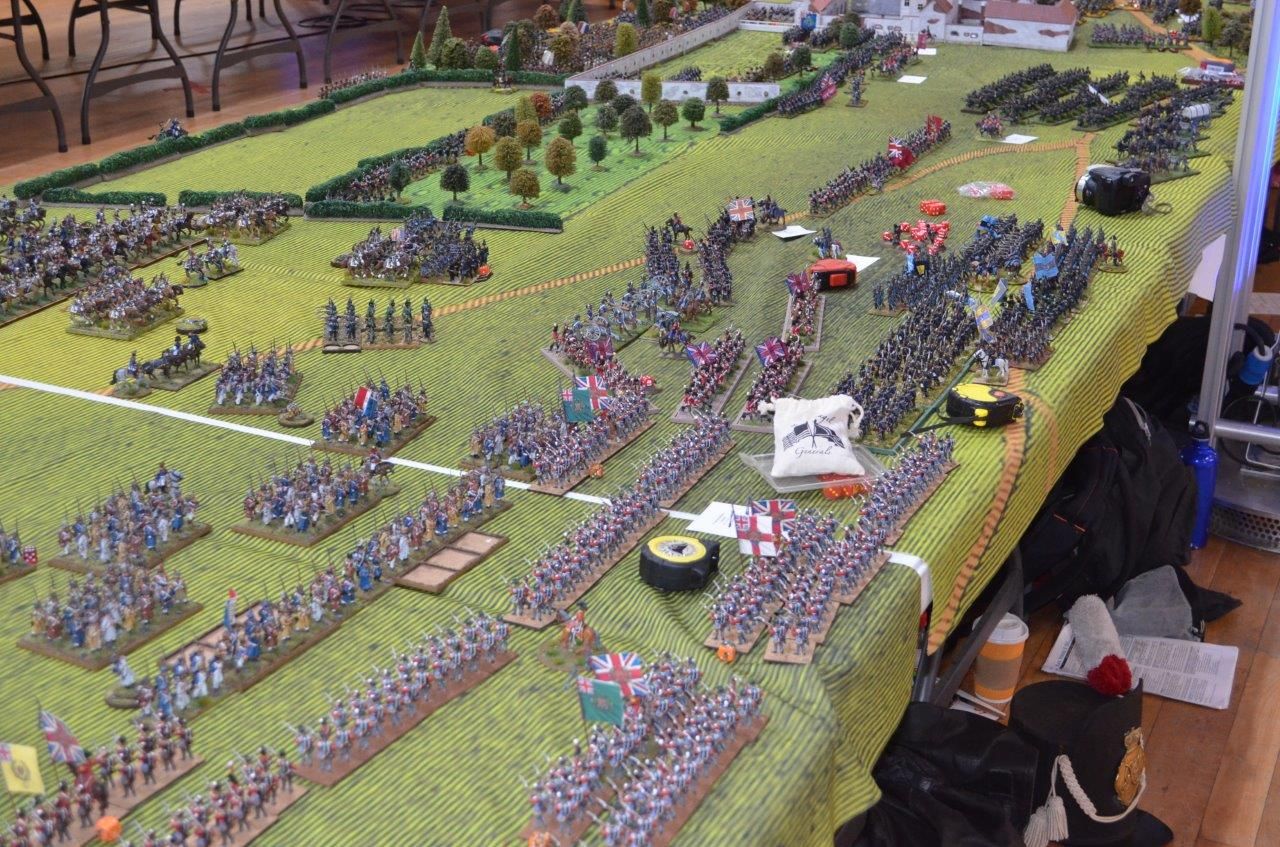
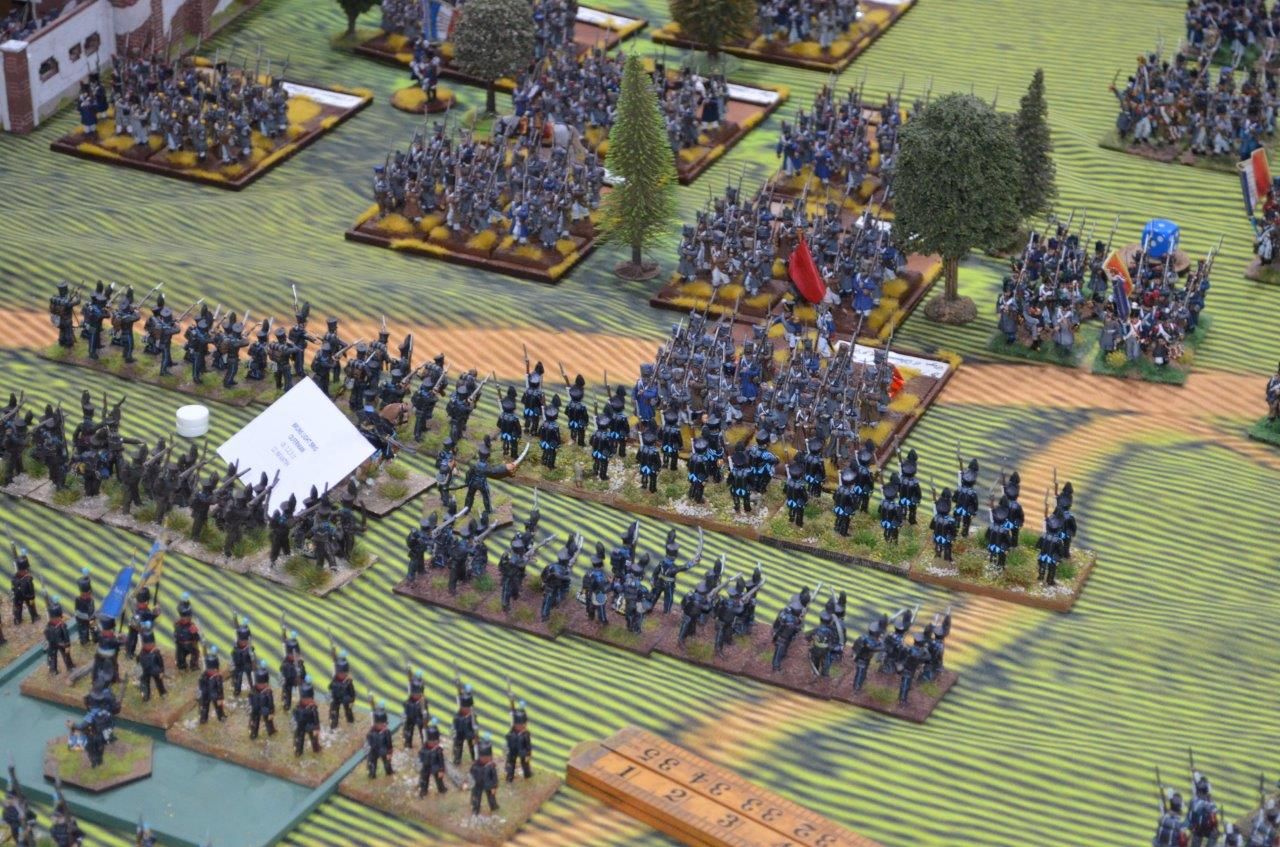
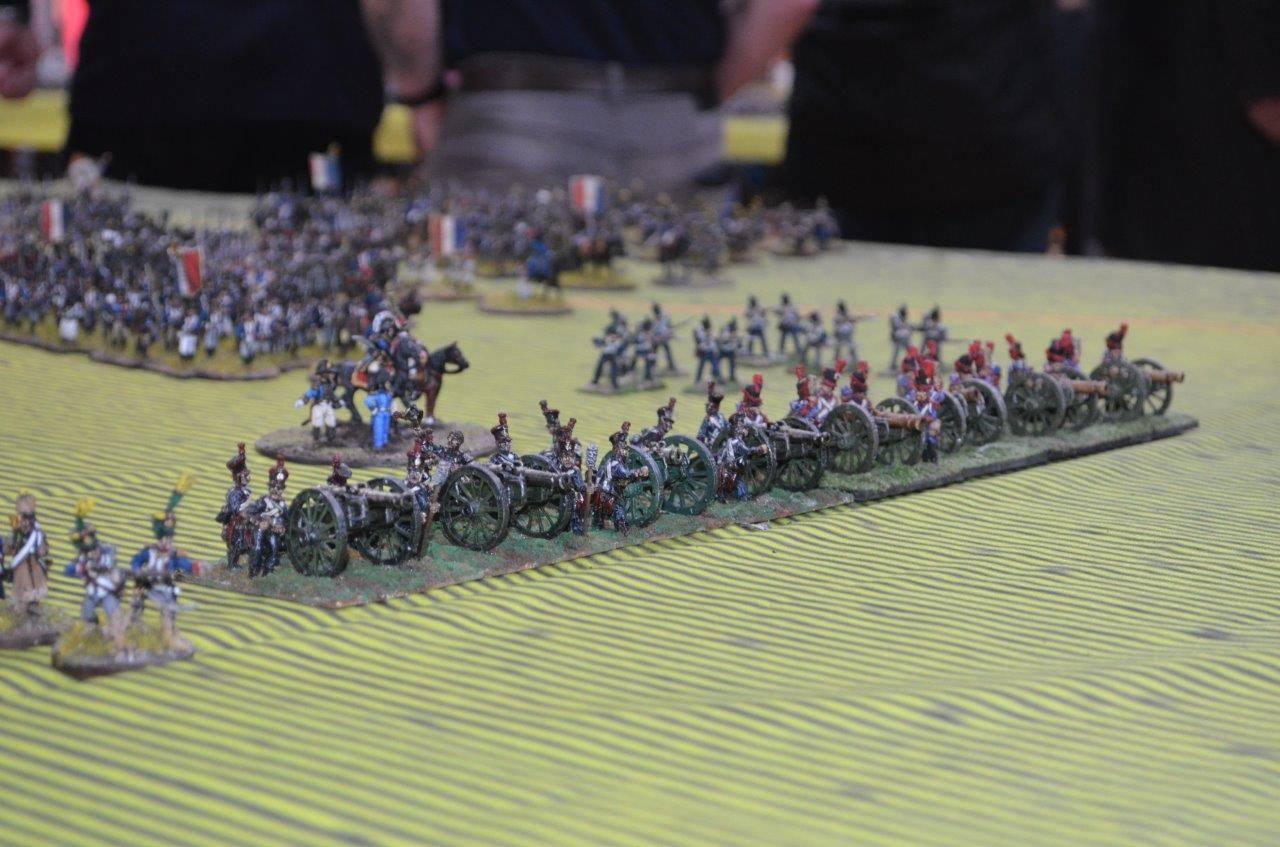
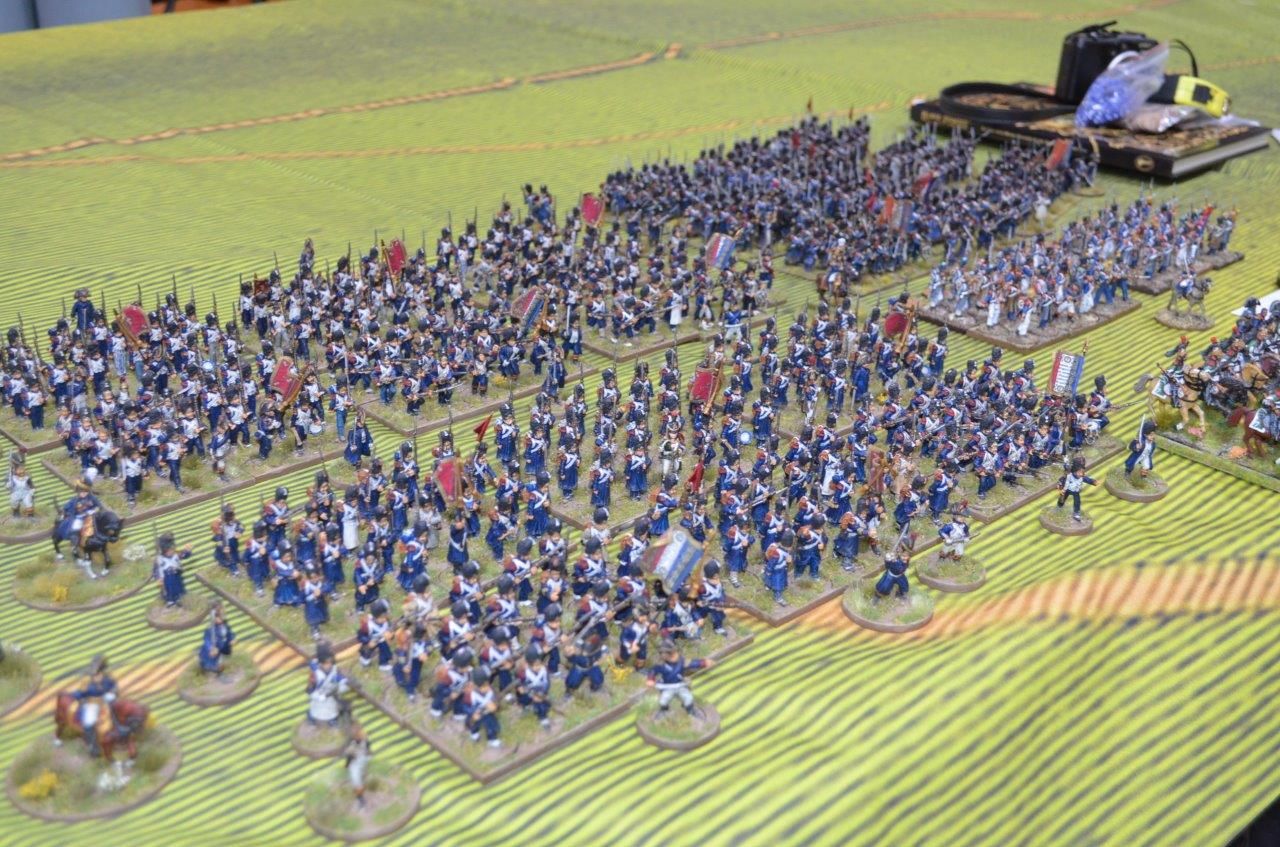
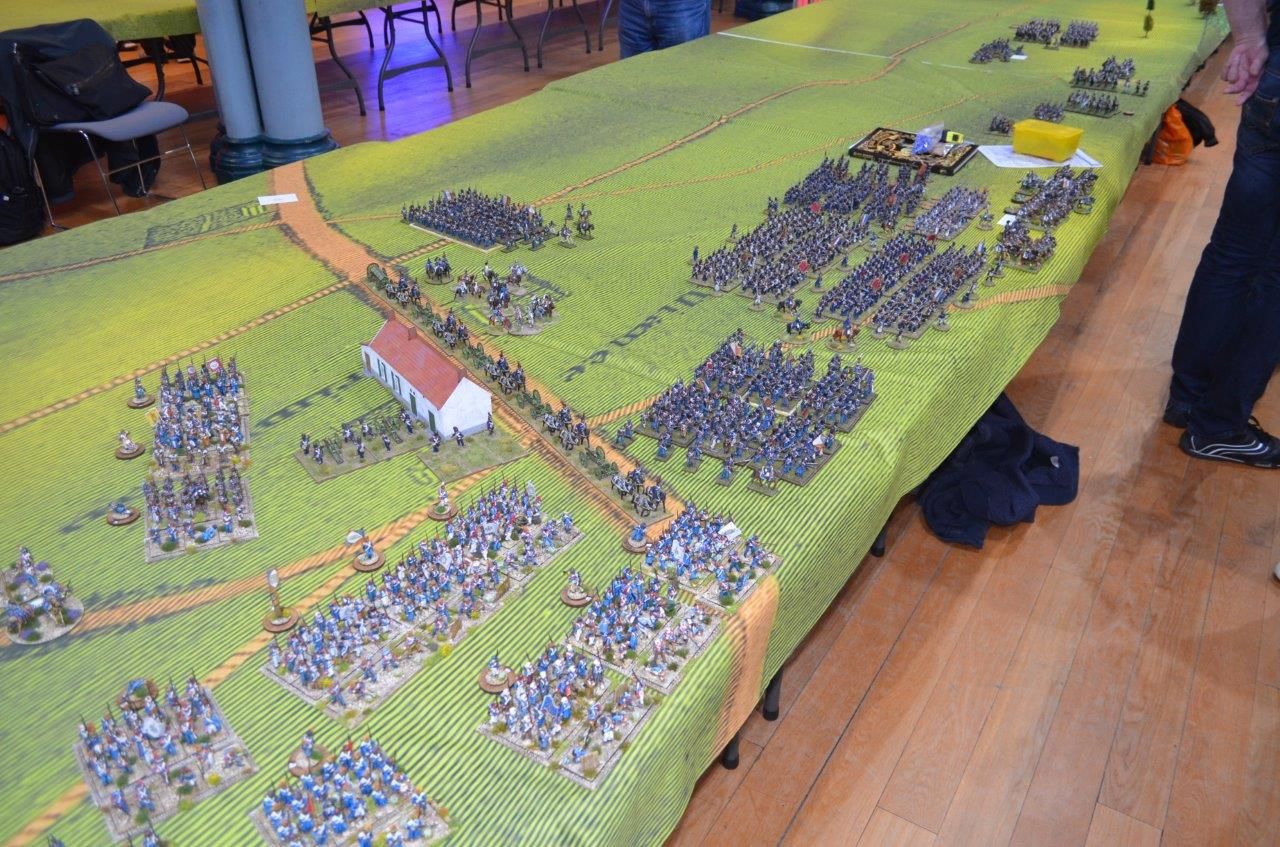
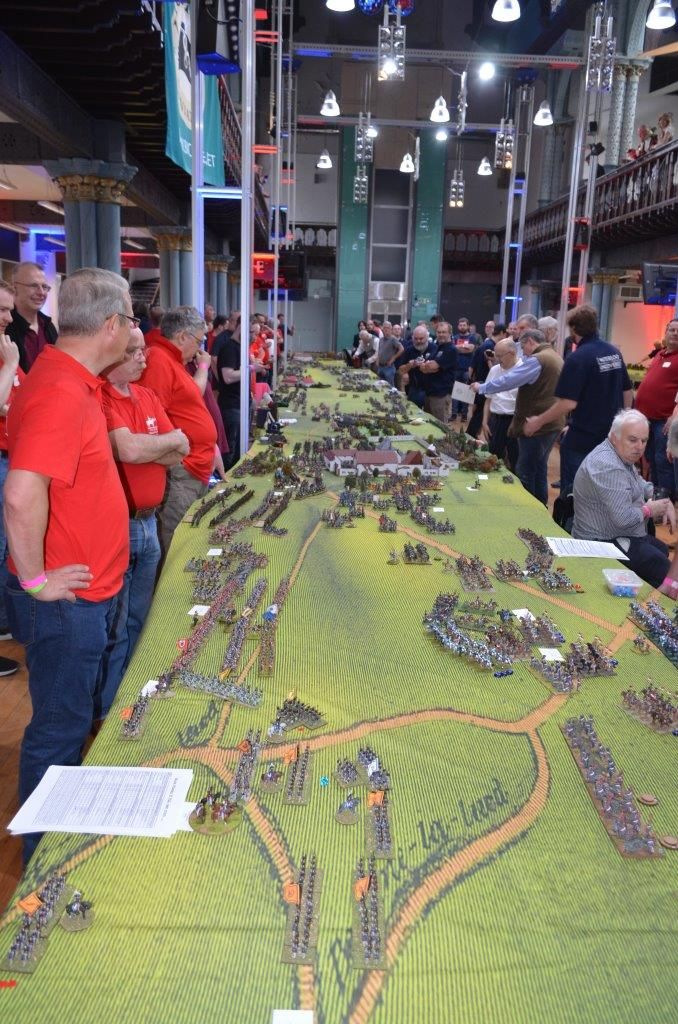
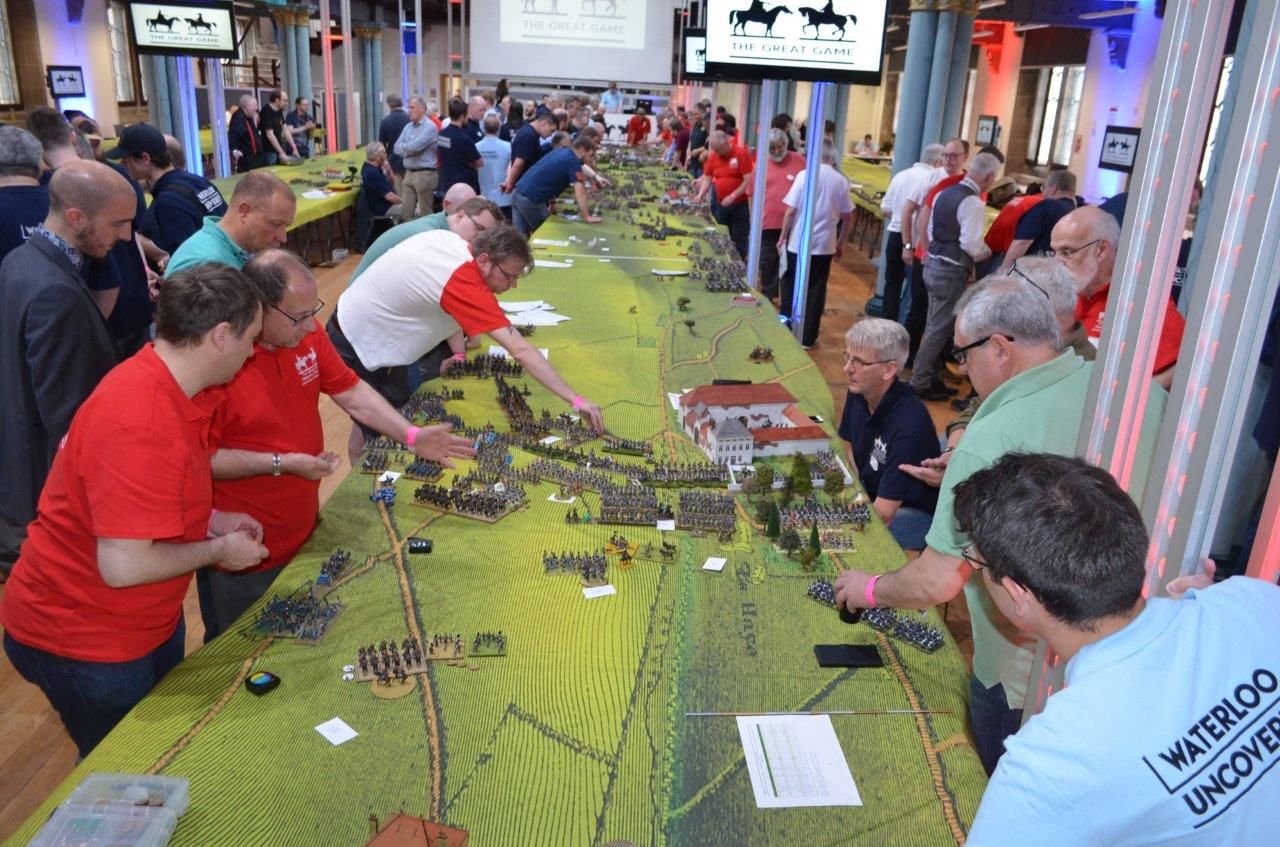
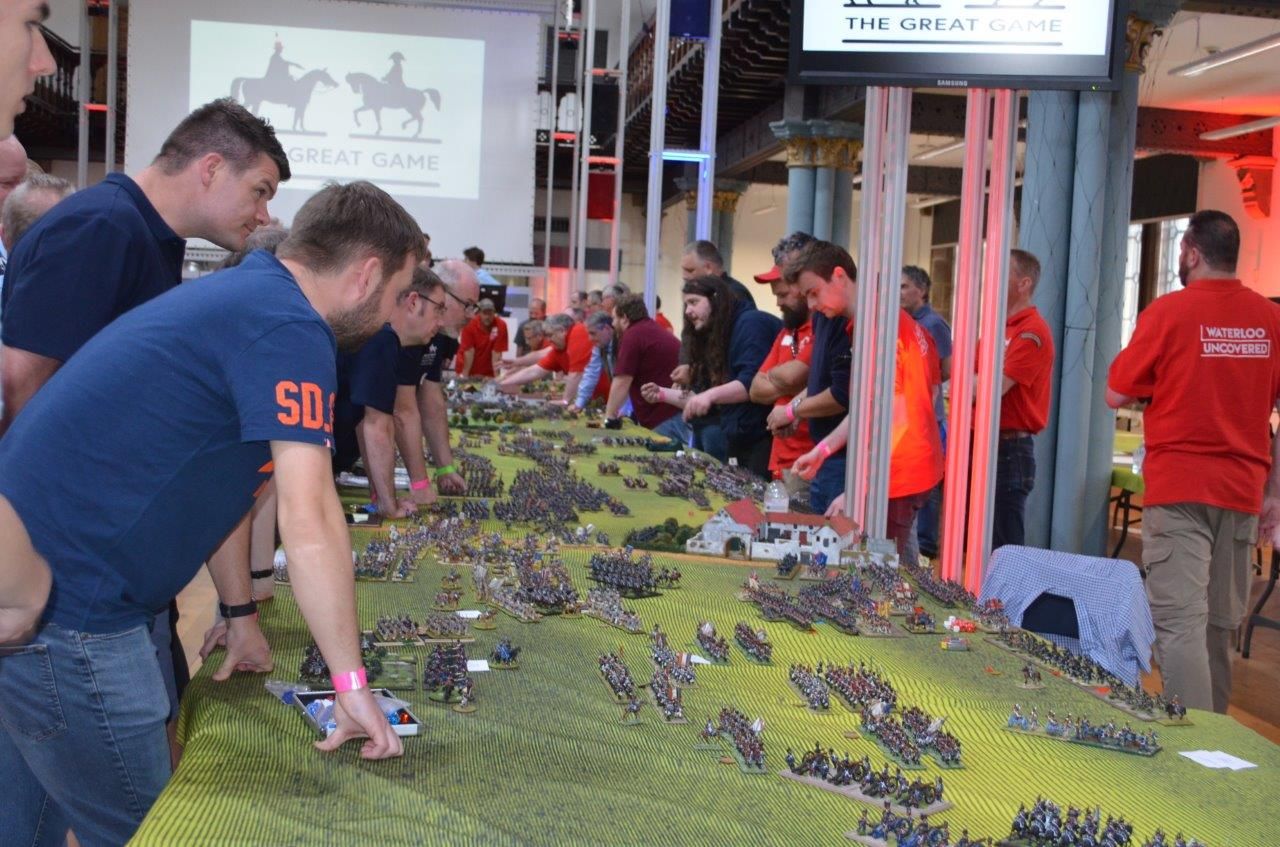
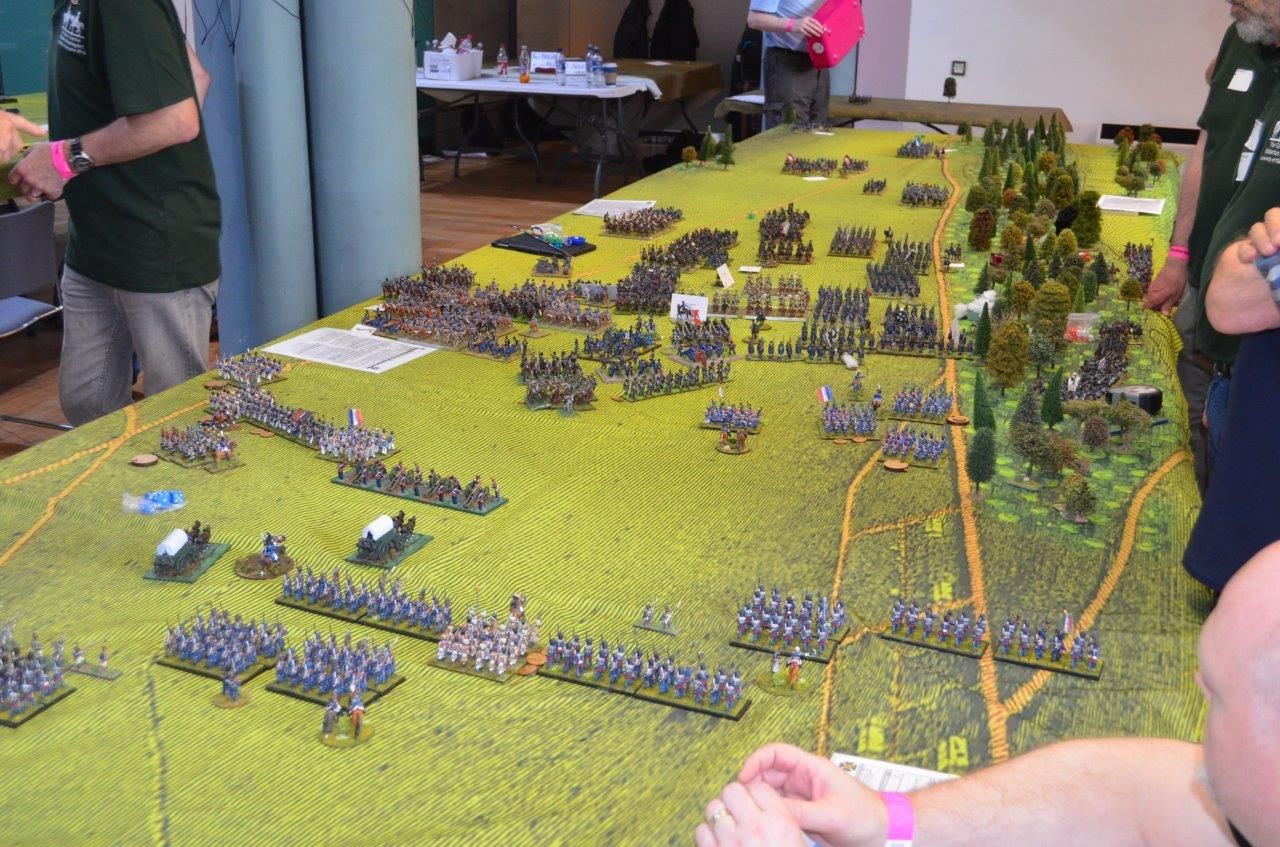
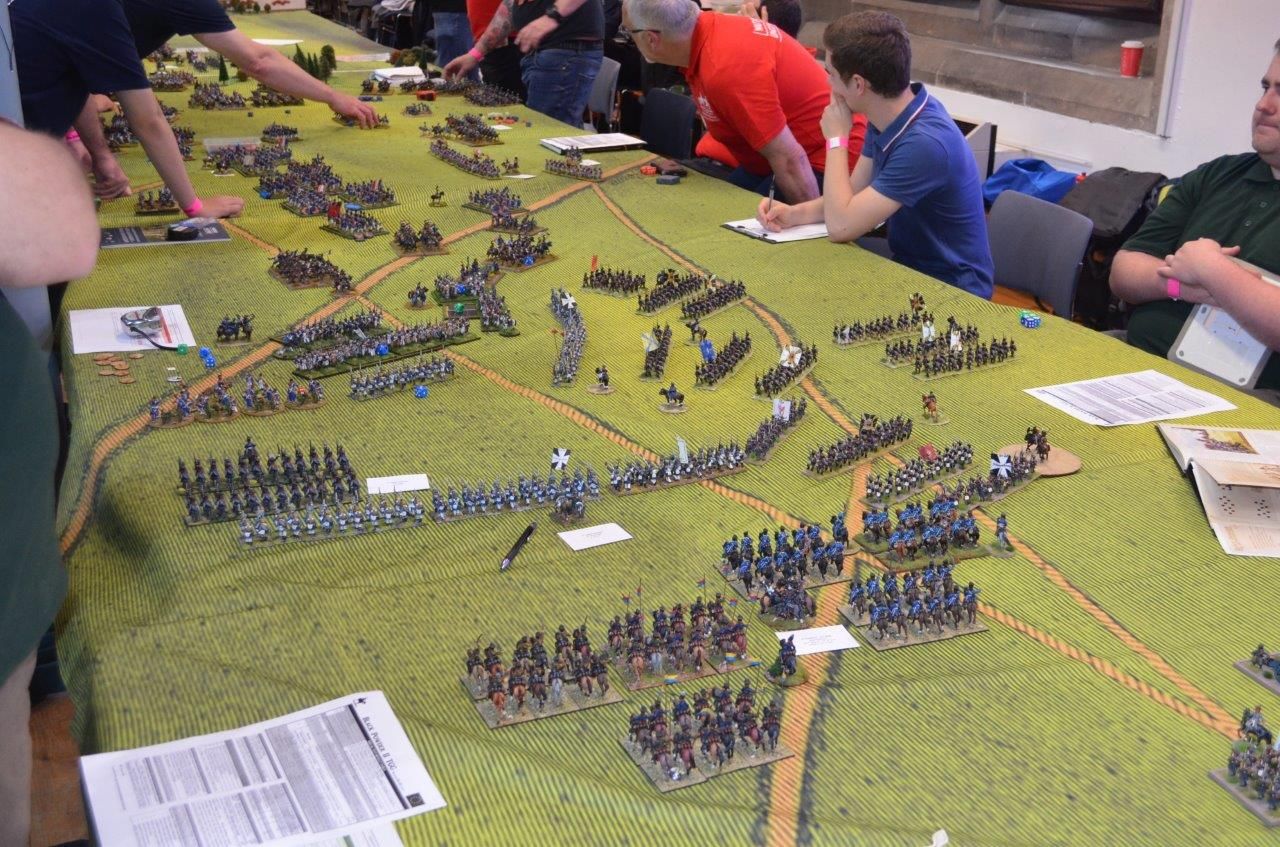
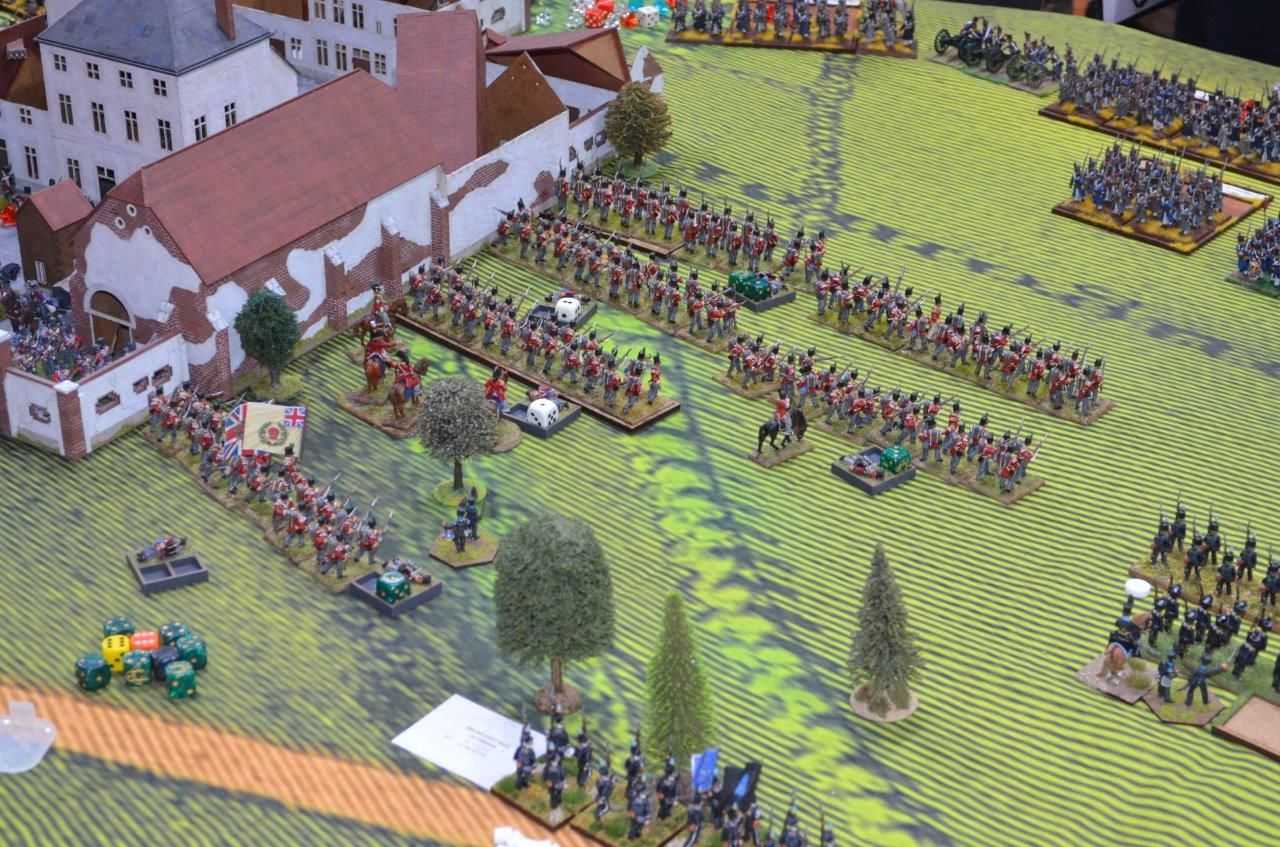
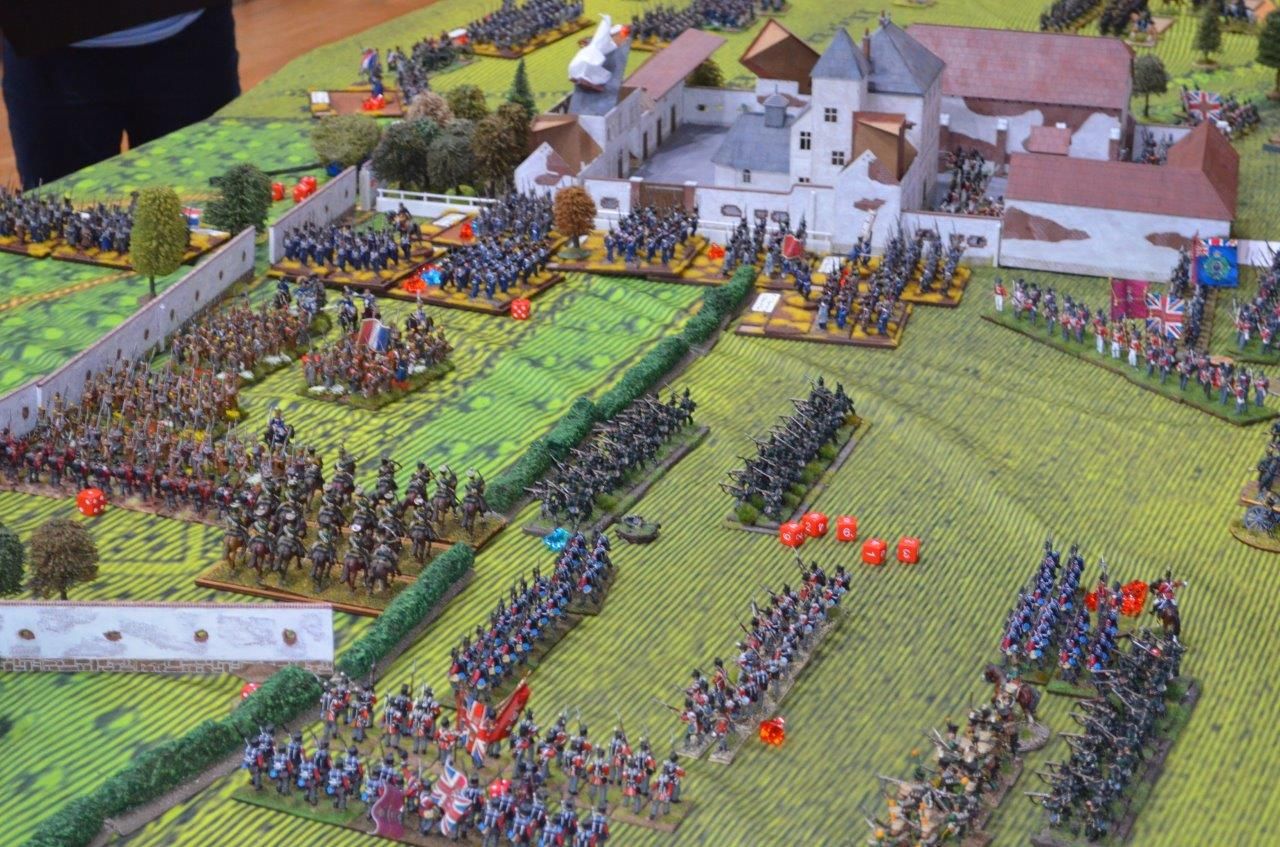
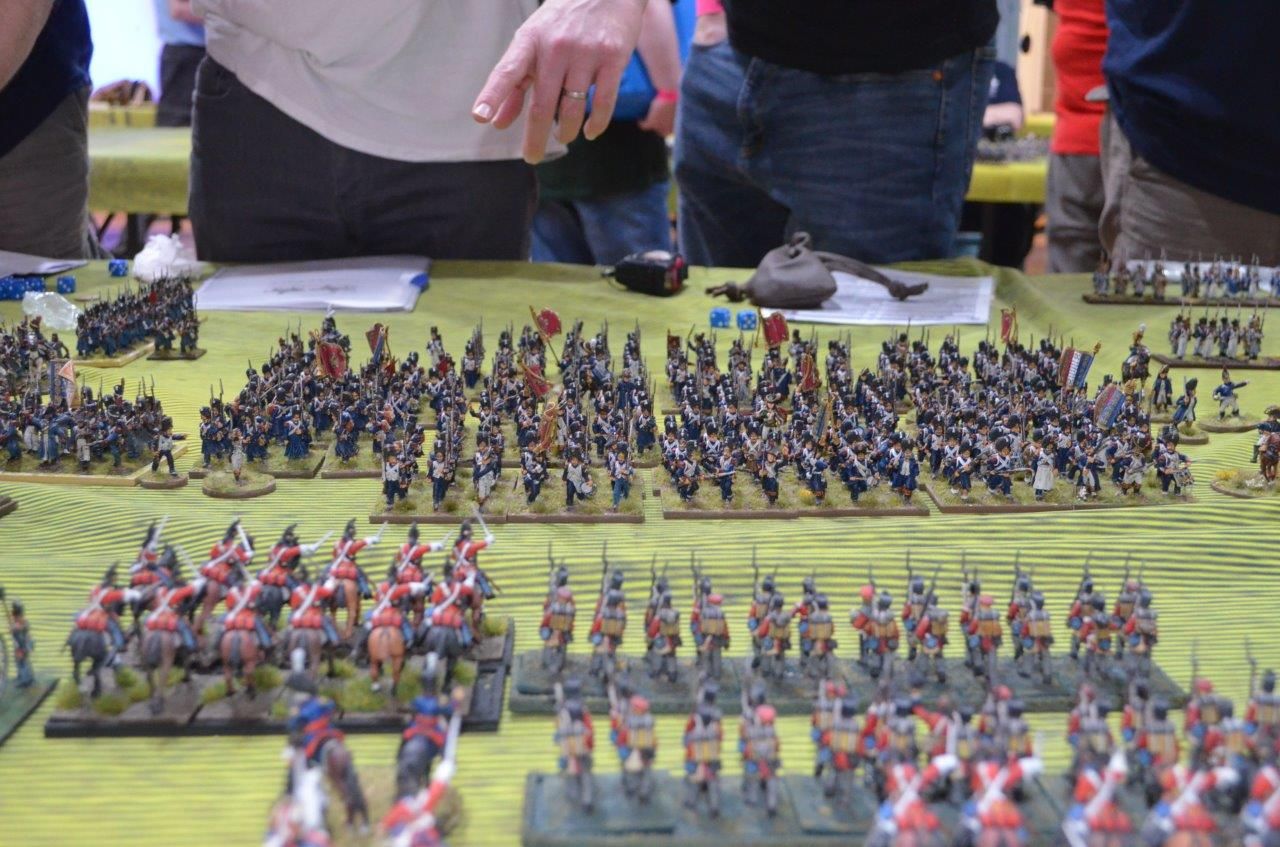
Two weeks ago I had the fortune to be up in Glasgow as an
umpire for the Great Game replayed. If you haven’t heard about this it was a
massive re-fight of the Battle of Waterloo featuring over 22500 x 28mm figures
on the table.
The event was hosted by the UK registered charity Waterloo
Uncovered. This organisation uses battlefield archeaology to help veterans of
our armed services to overcome conditions such as PTSD. I met several of these
chaps at the event and they all stated how much this charity had helped to turn
their lives around. It is a worthwhile cause and I would urge anybody
interested in what they do to check out their website.
This post is going to be picture heavy as I have already
committed to writing an article for Wargames Illustrated but I will report at
the end of this post my observations of what I thought went well on the day and
what didn’t go quite as planned.
Perhaps these learning's can help those
thinking about planning future type events.
Before I start with my picture board I’d like to pass on a
few thanks.
Firstly I’d like to thank Guy Bowers (of WSS fame) for
accepting my candidacy as an umpire. It was great to catch up with you in
Glasgow.
Secondly I’d like to pass on my congratulations to all those
directly connected to Waterloo Uncovered. You delivered a spectacular event and
you deserve all the plaudits already mentioned across the web and national
media. Yours is a most worthwhile cause and deserves greater prominence.
Thirdly I’d like to thank those directly connected to the
organisation of the game. In particular Bill Gilchrist, Jack Glanville, Ian Beal and Donald Adamson. Your
contributions were significant.
Next I’d like to thank my fellow umpires and in particular
the Australian contingent who warmly welcomed me into their select circle for
the four days.
Finally I’d like to thank all the combatants in the Great
Game – they made life easy for us umpires with no fuss or bother.
The pictures - and remember my thoughts on what needs to be reviewed are at the end
1. The Set Up
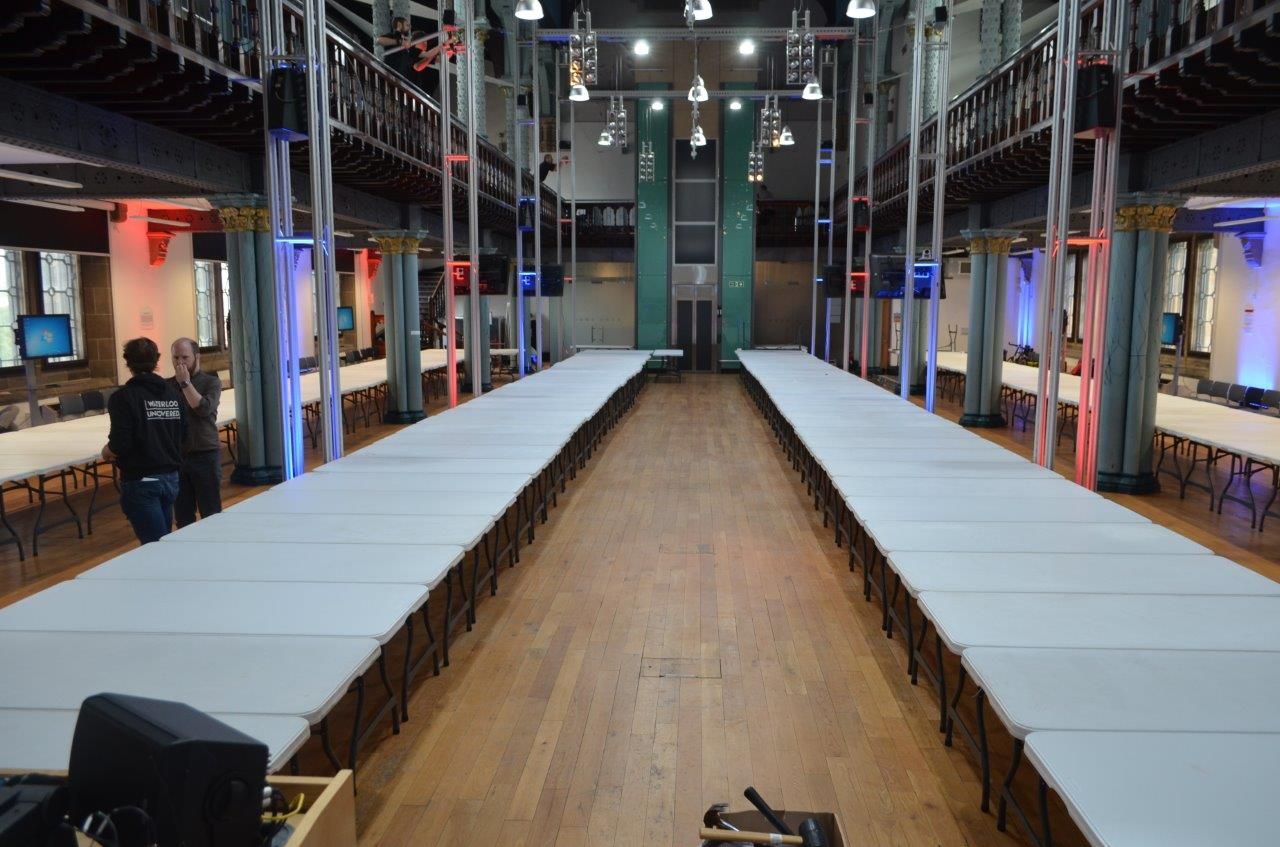 |
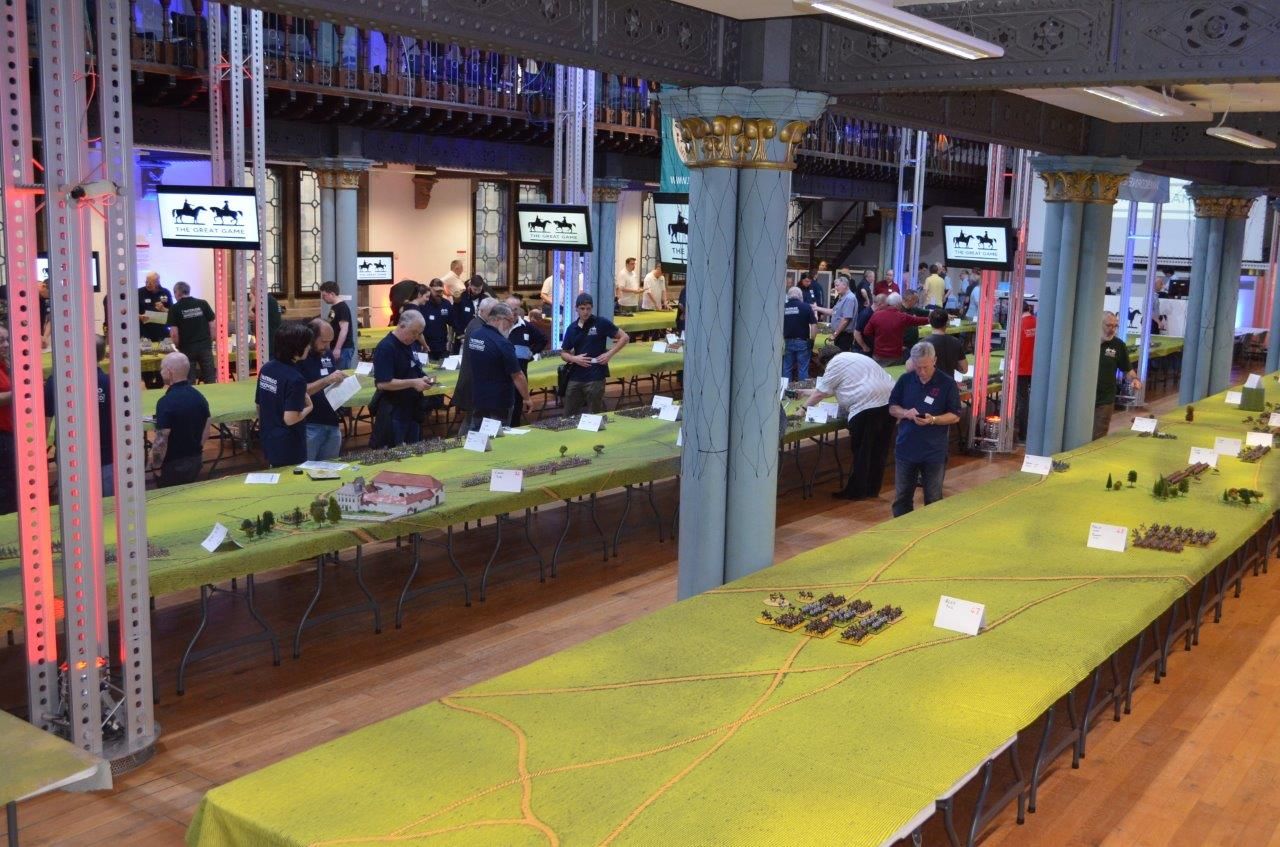
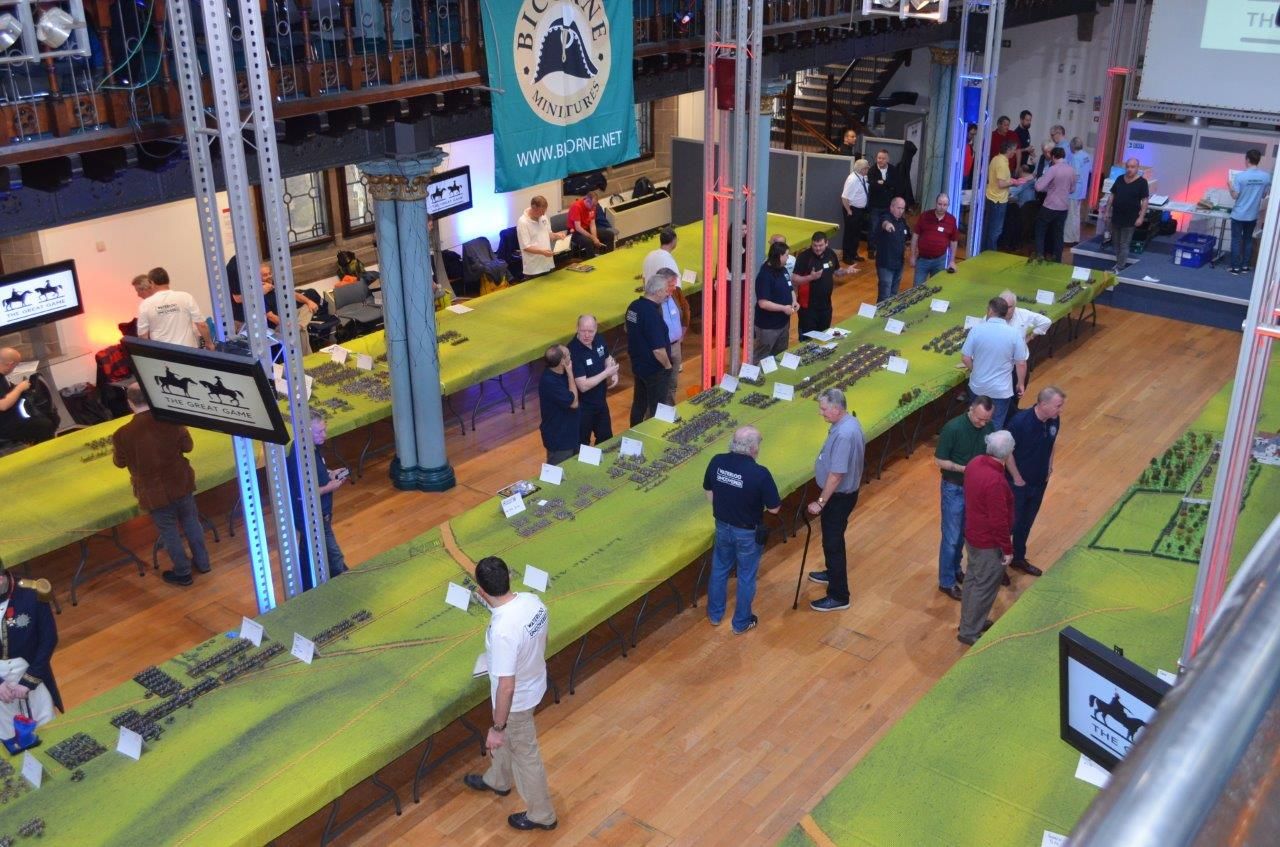
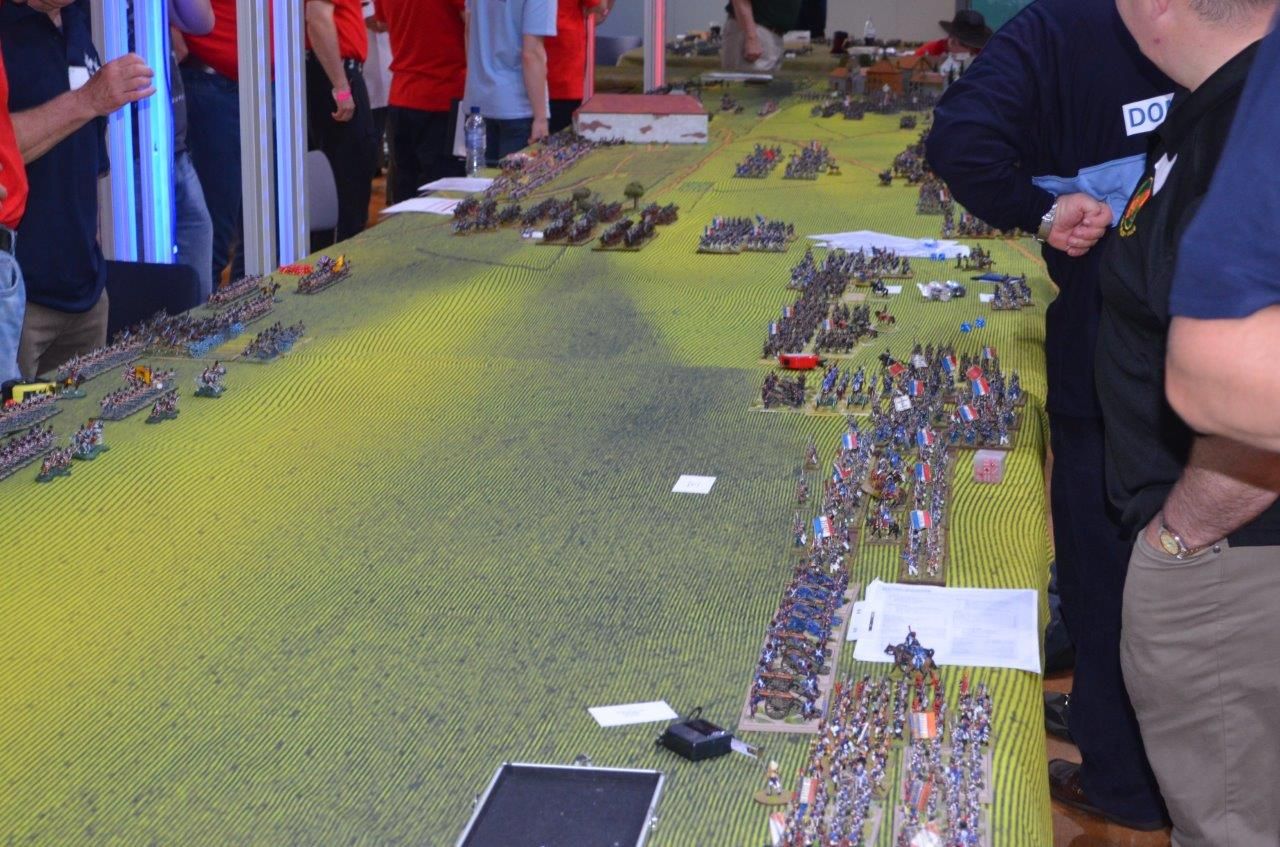
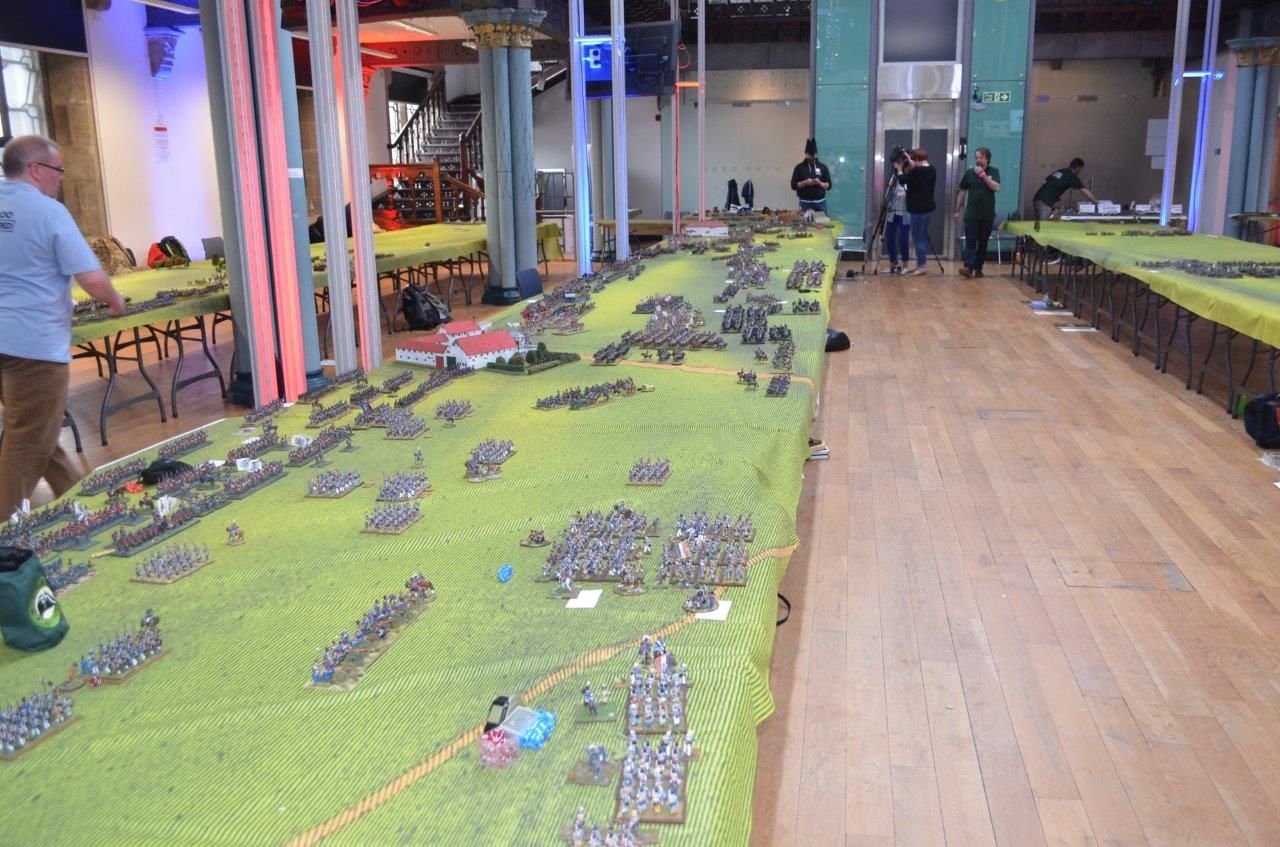
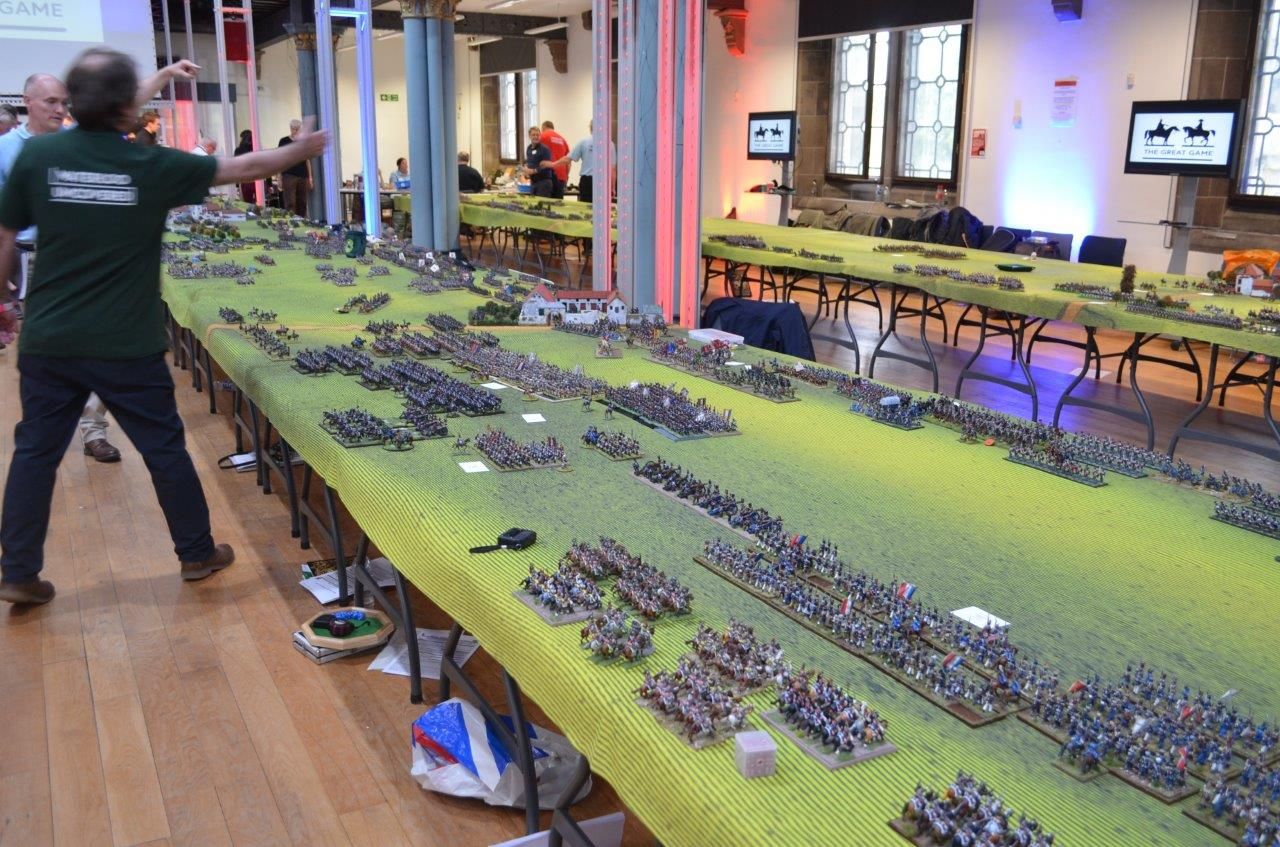
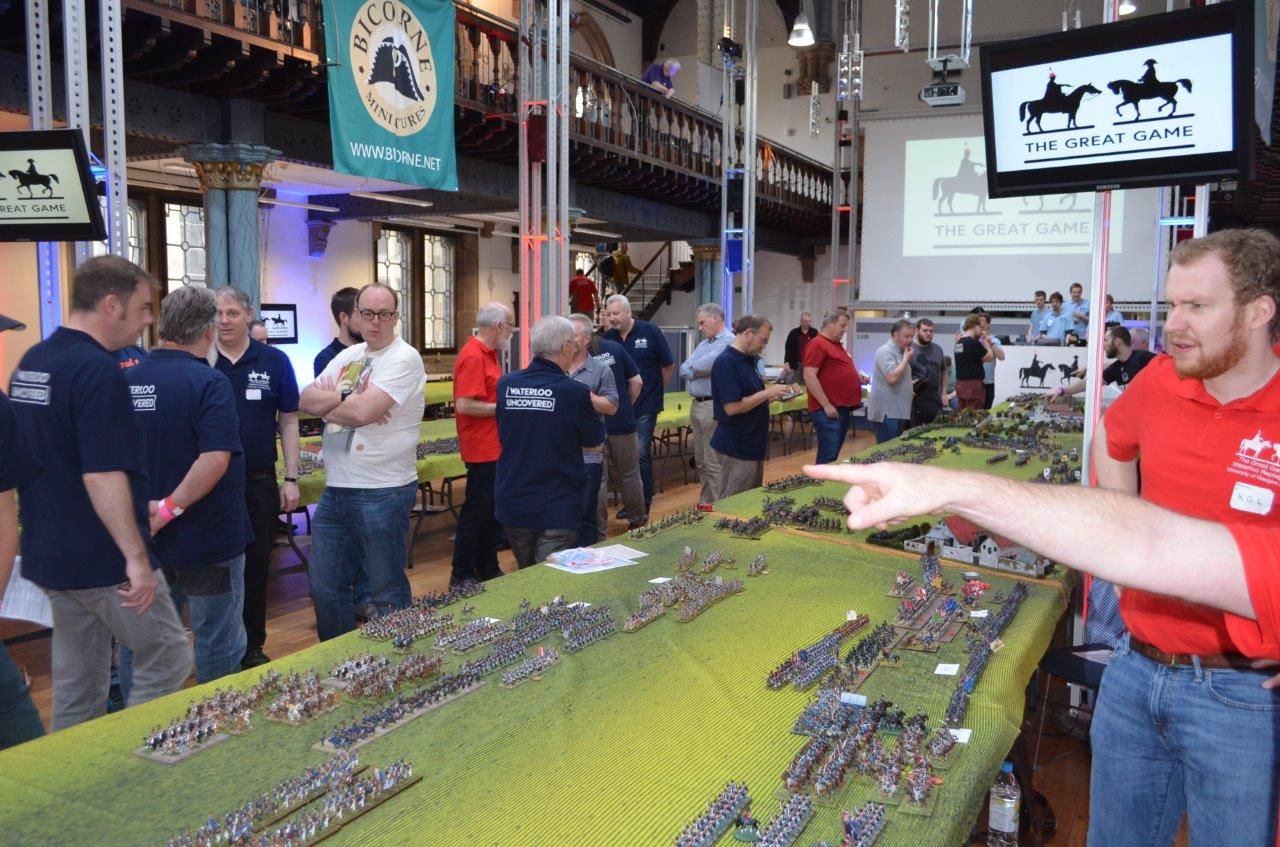
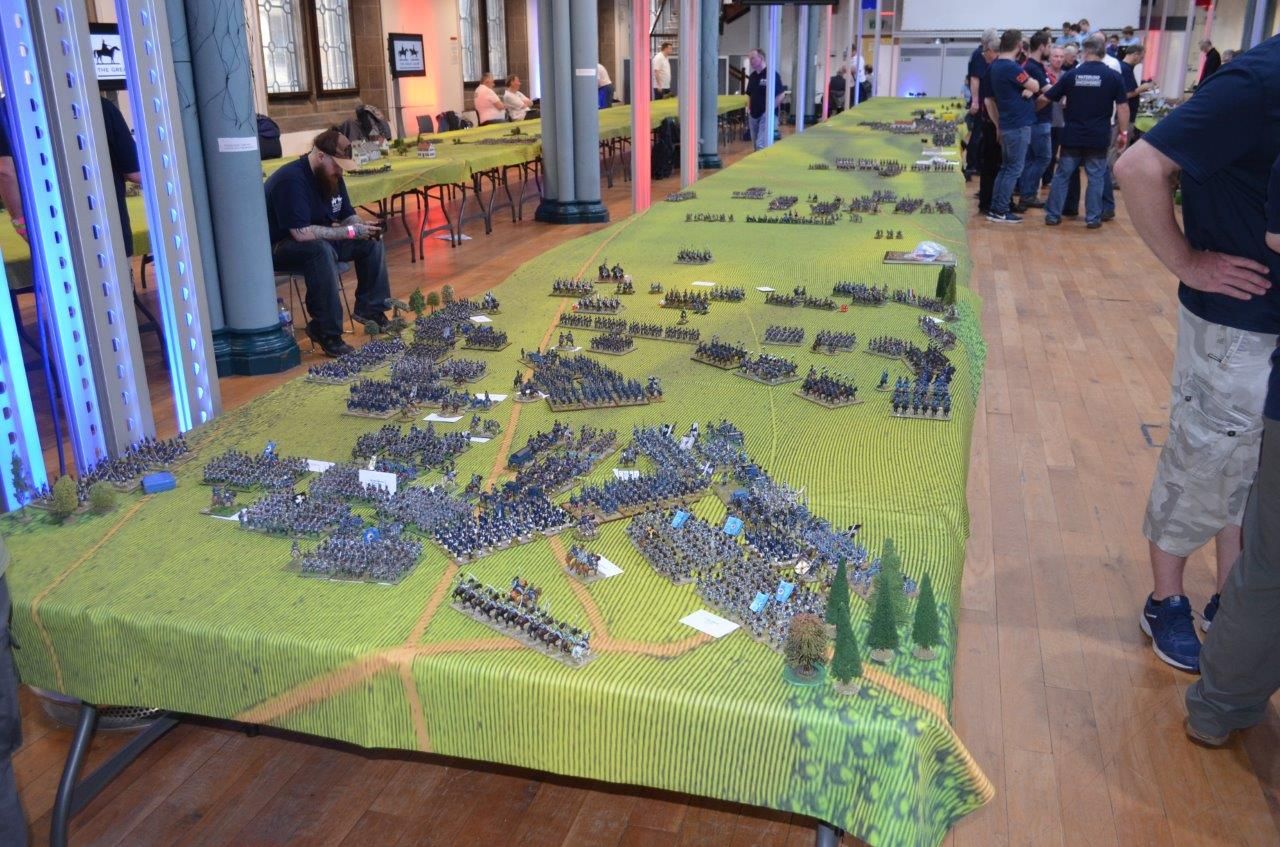
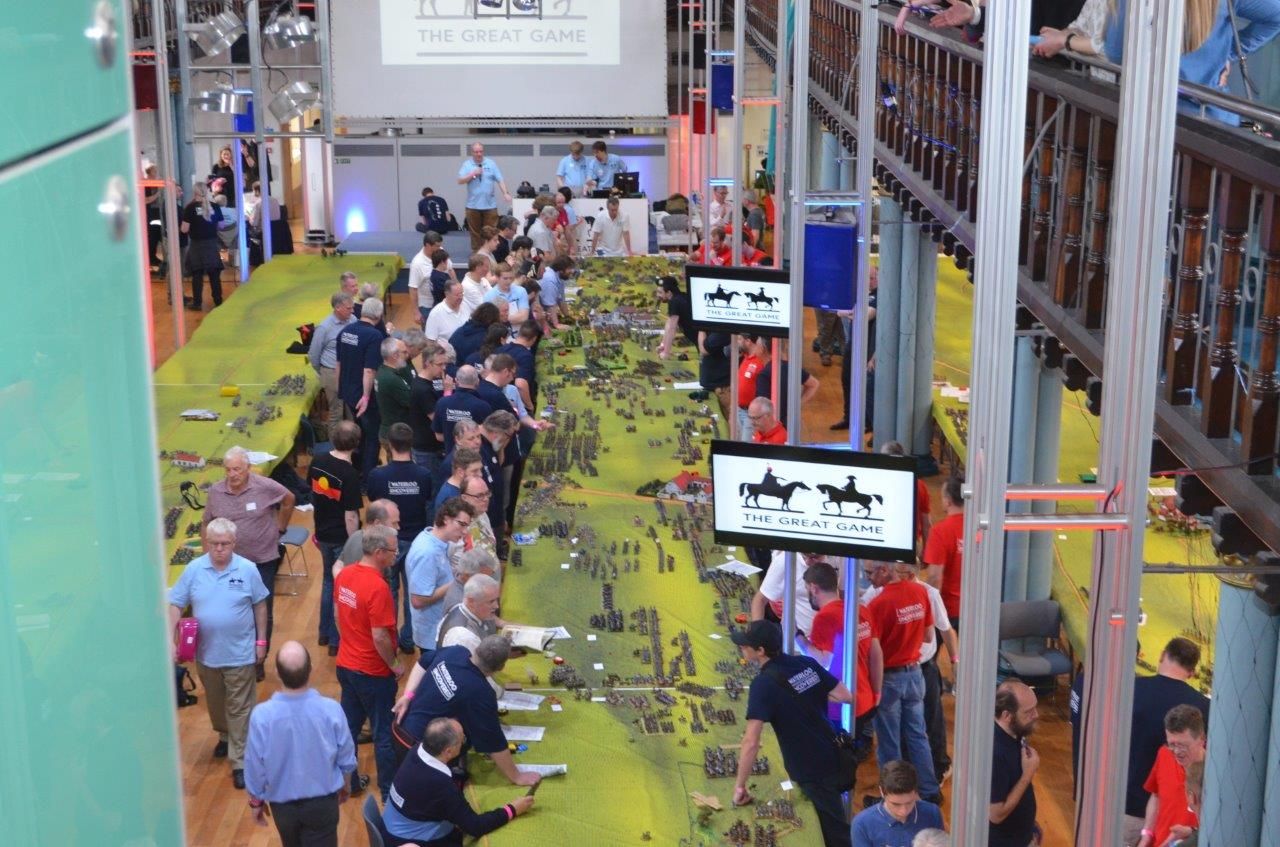
200 tables in four rows down the hall
|
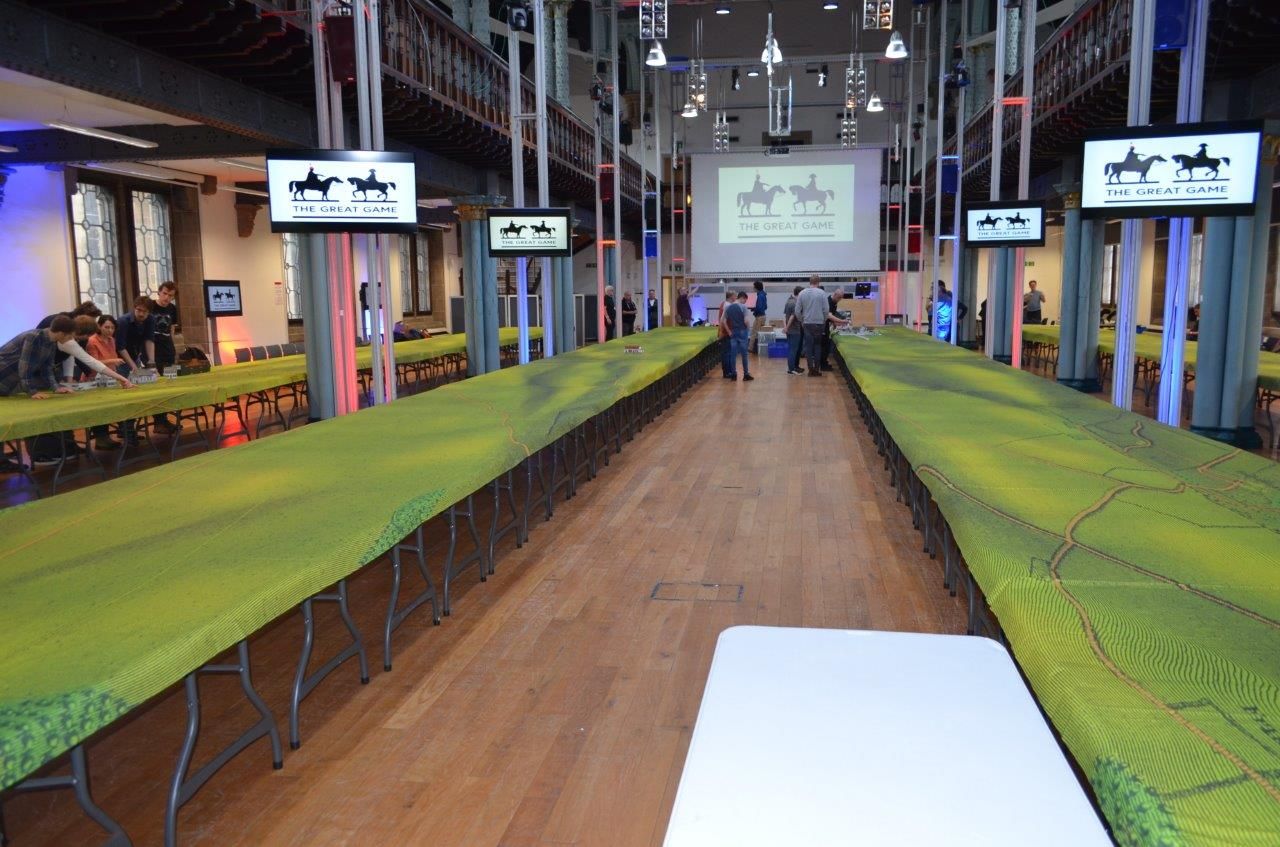 |
| The topped with a very large Battlemat |
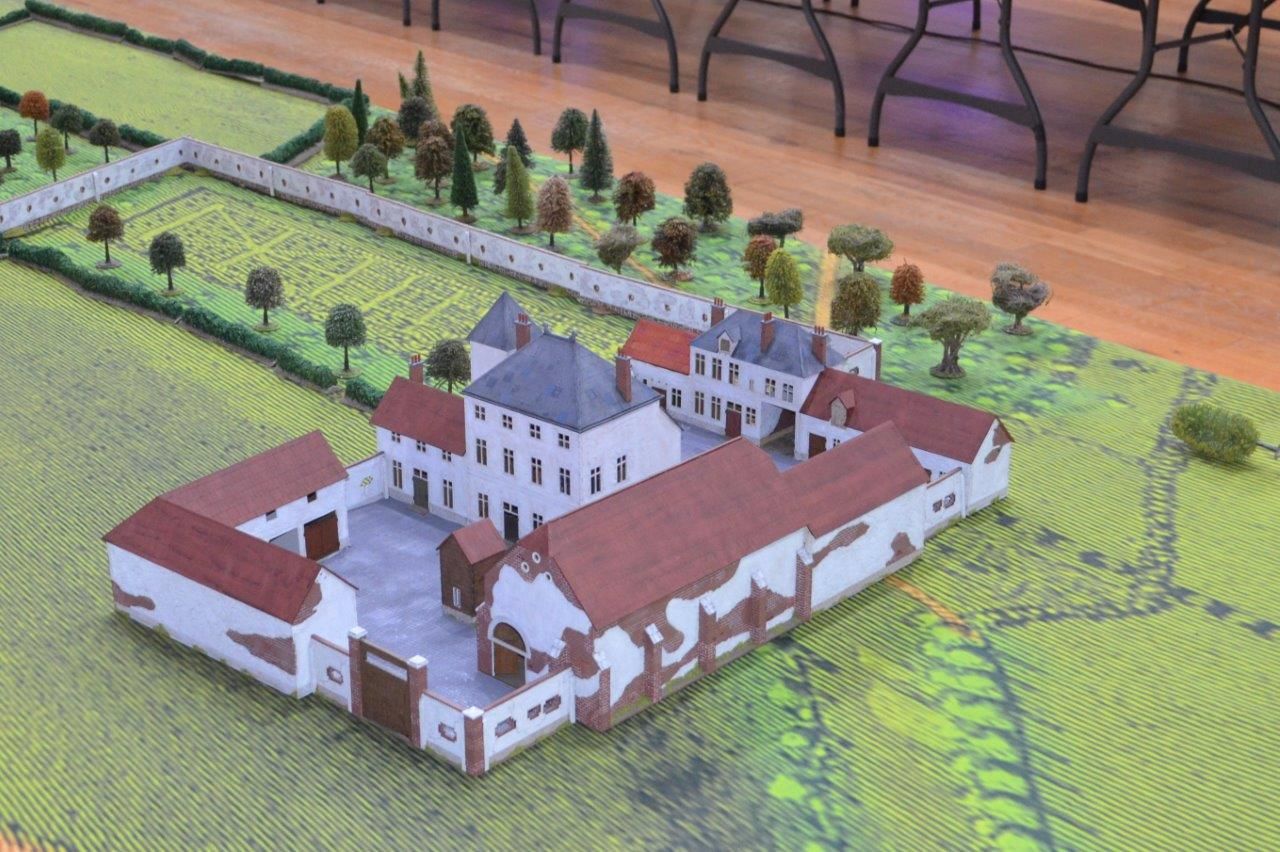
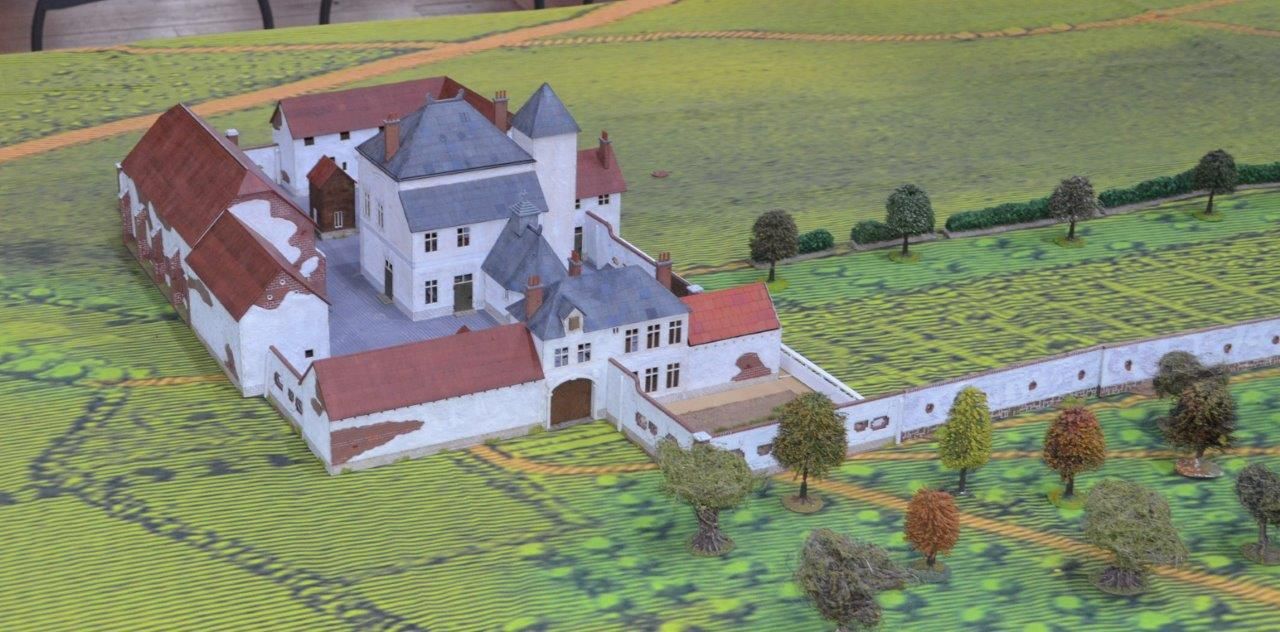
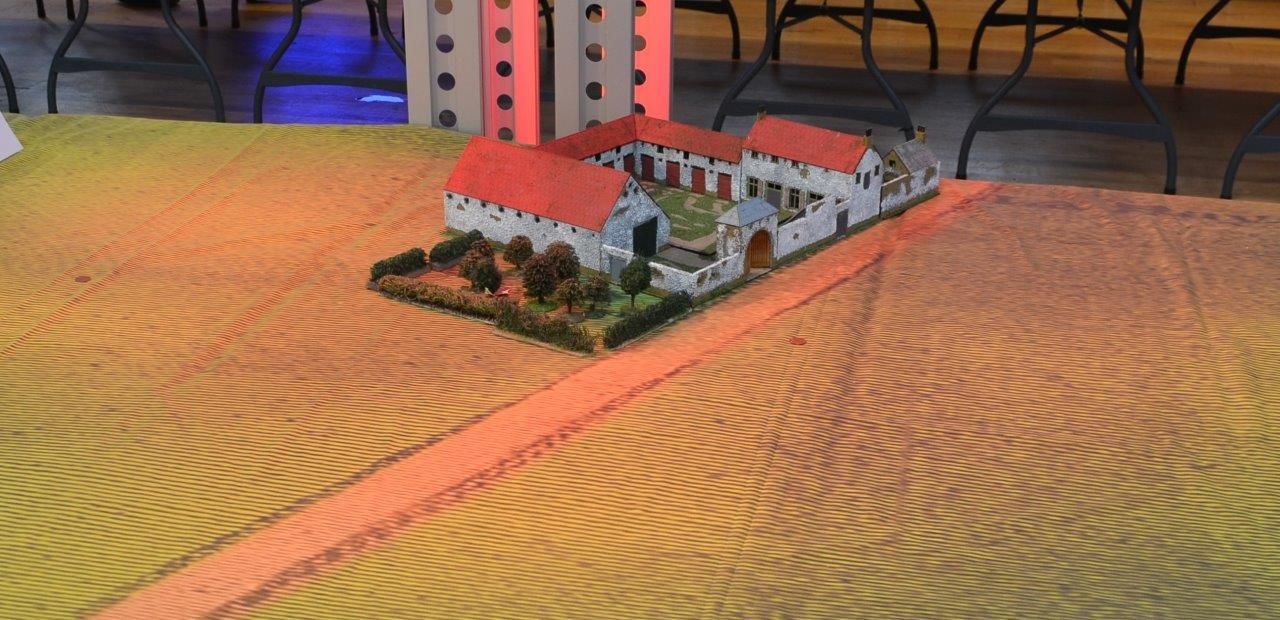
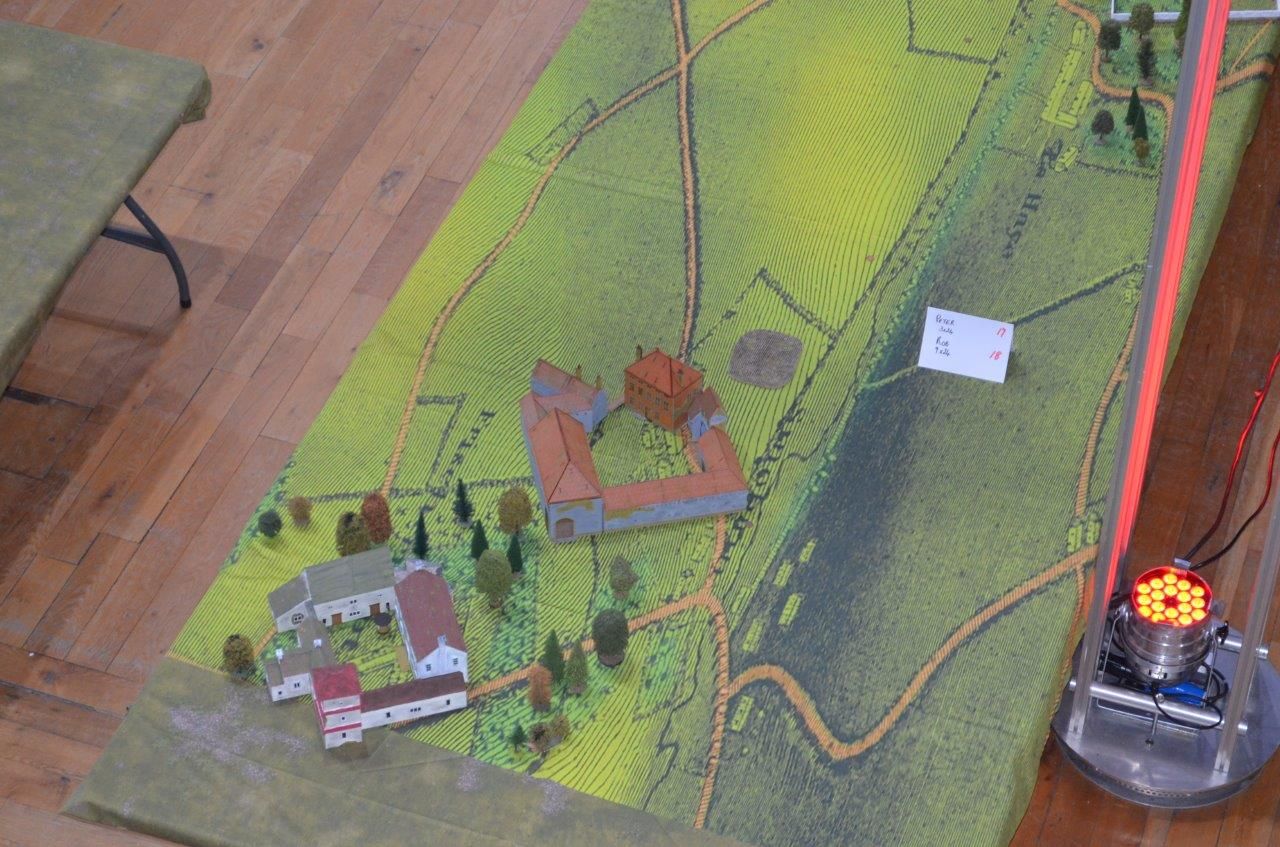
On top of the battle mat were placed the buildings
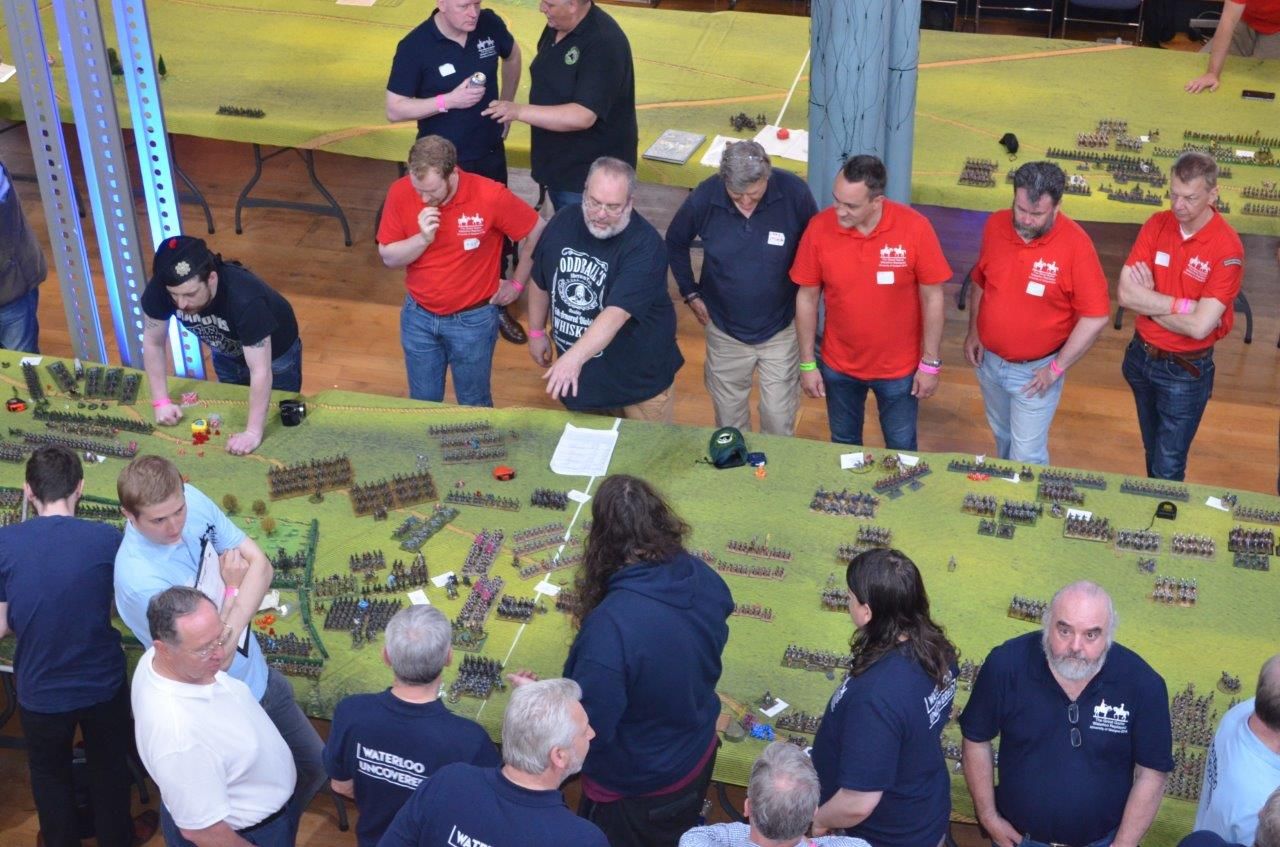
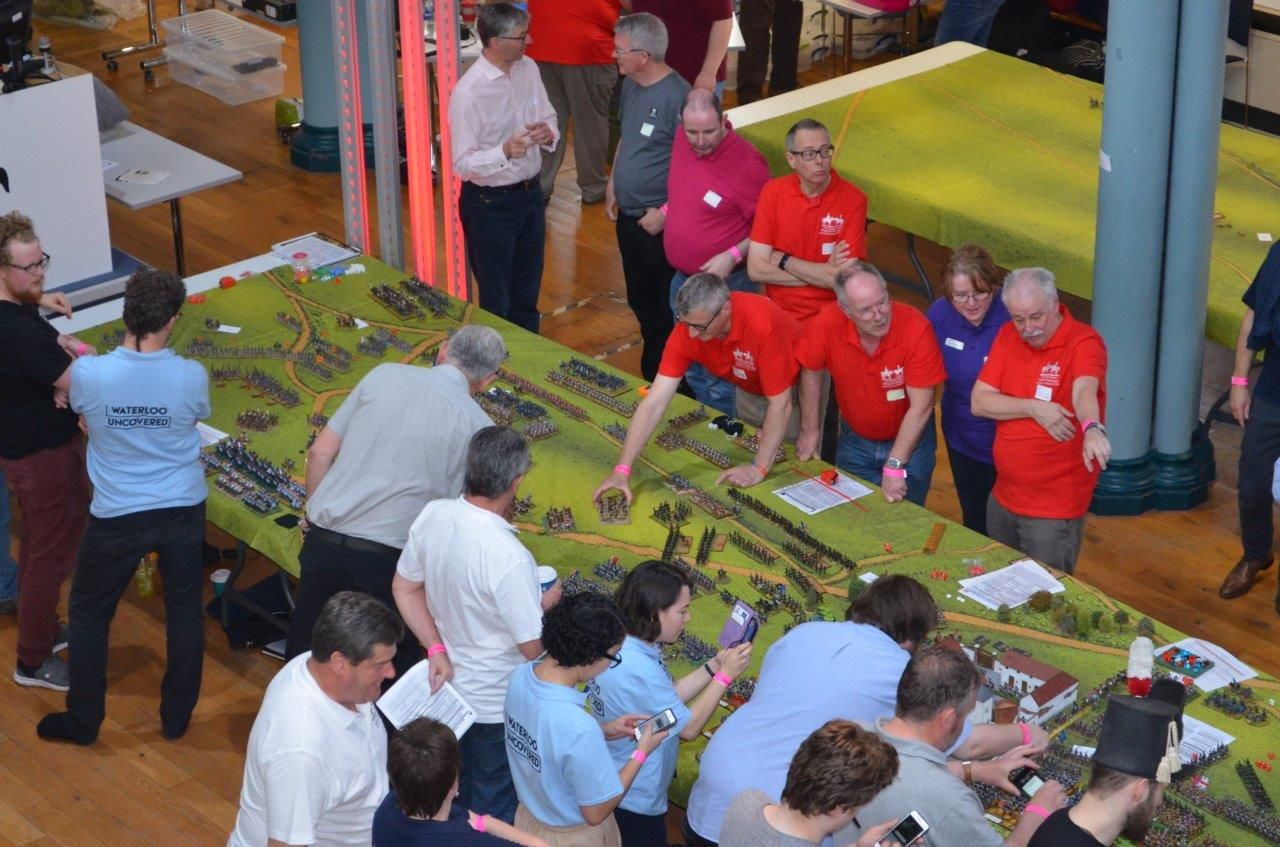
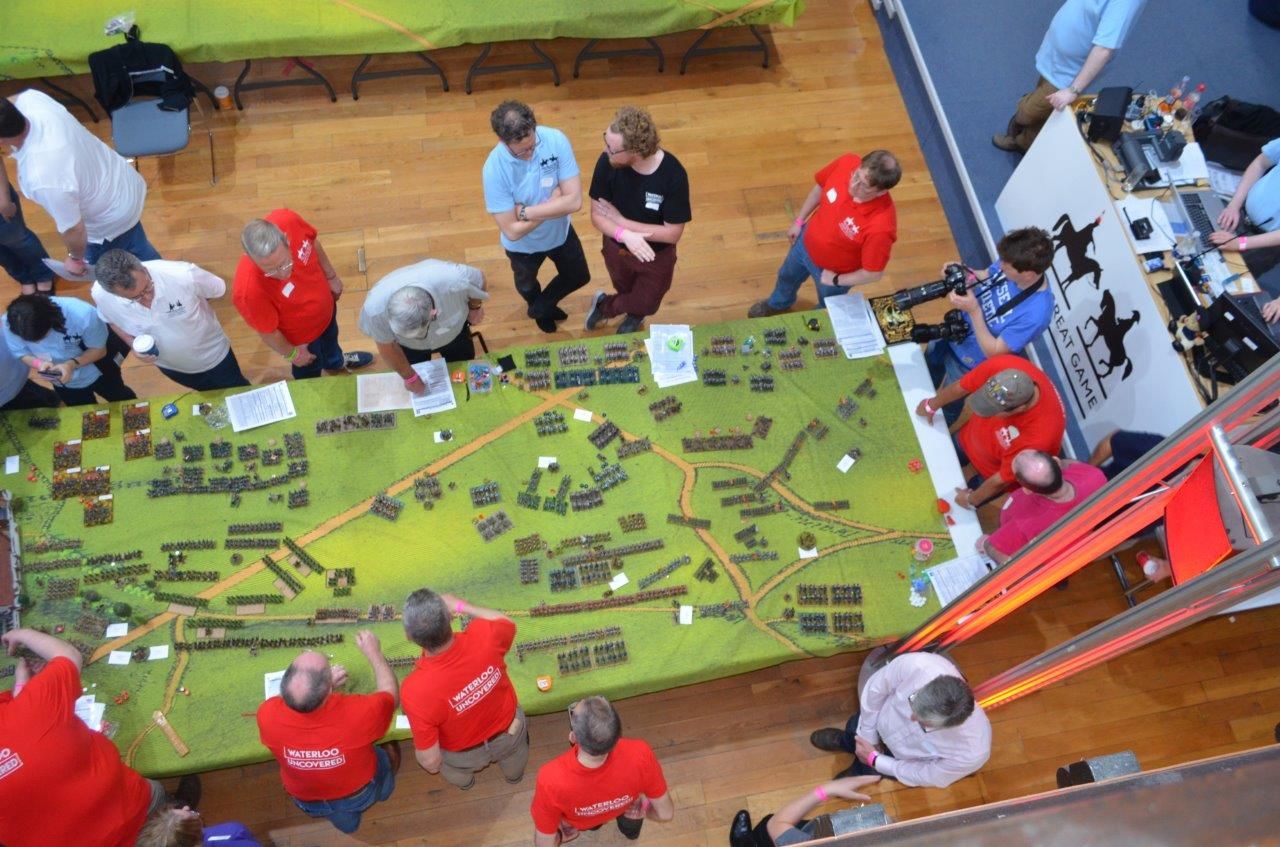
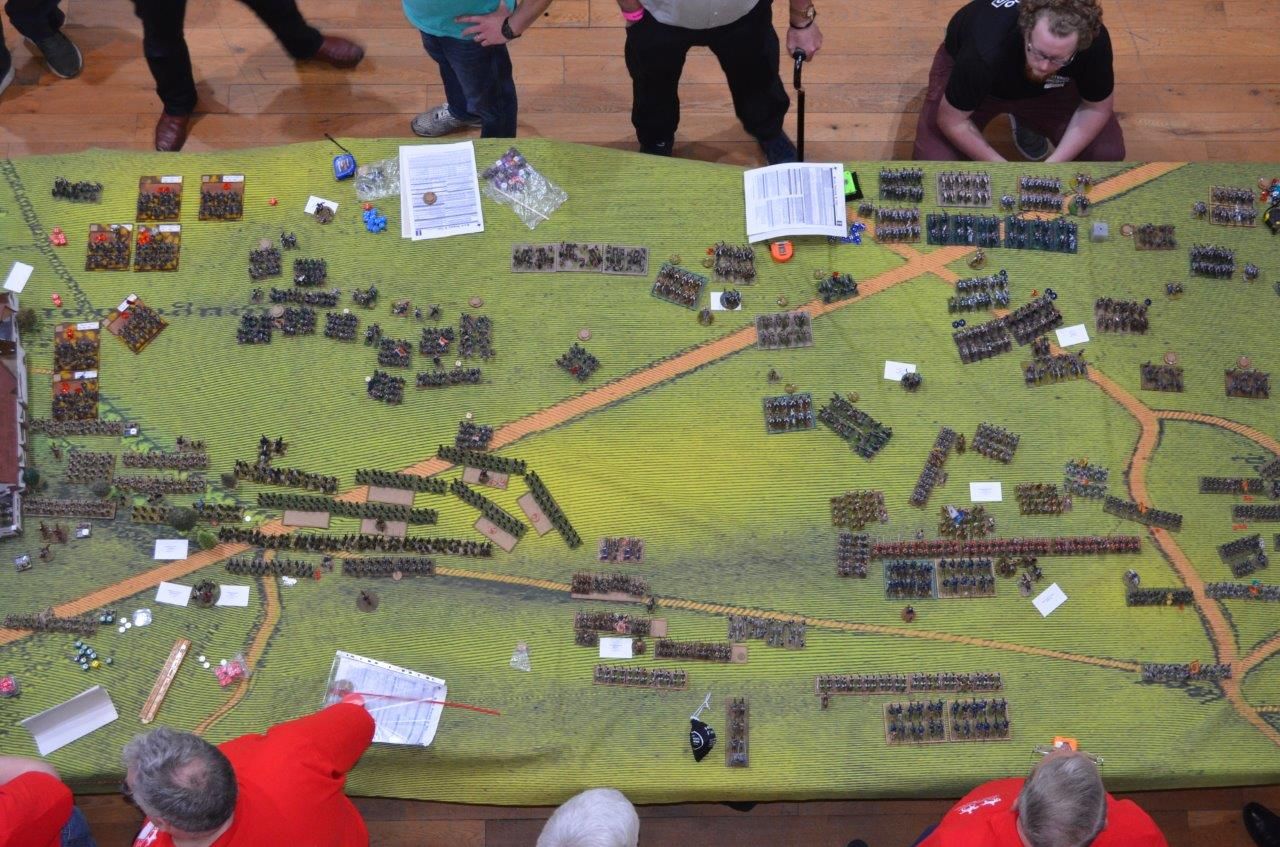
The hall had the fortune of having a gallery upstairs so I managed to get a number of birds eye shots of the action - cheaper and safer than using a drone.
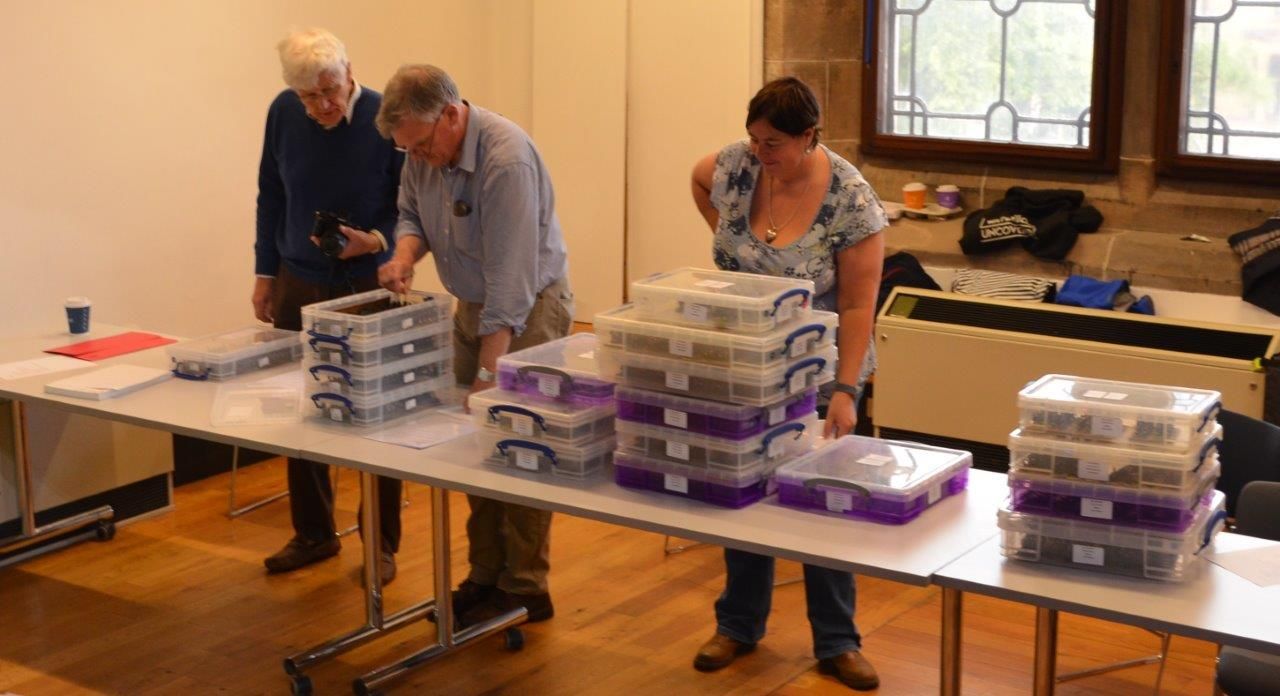
As figures arrived they were catalogued before being sent to the front....believe it or not the chap in the centre used to be the Chief Exec of a business I used to work for...its a small world
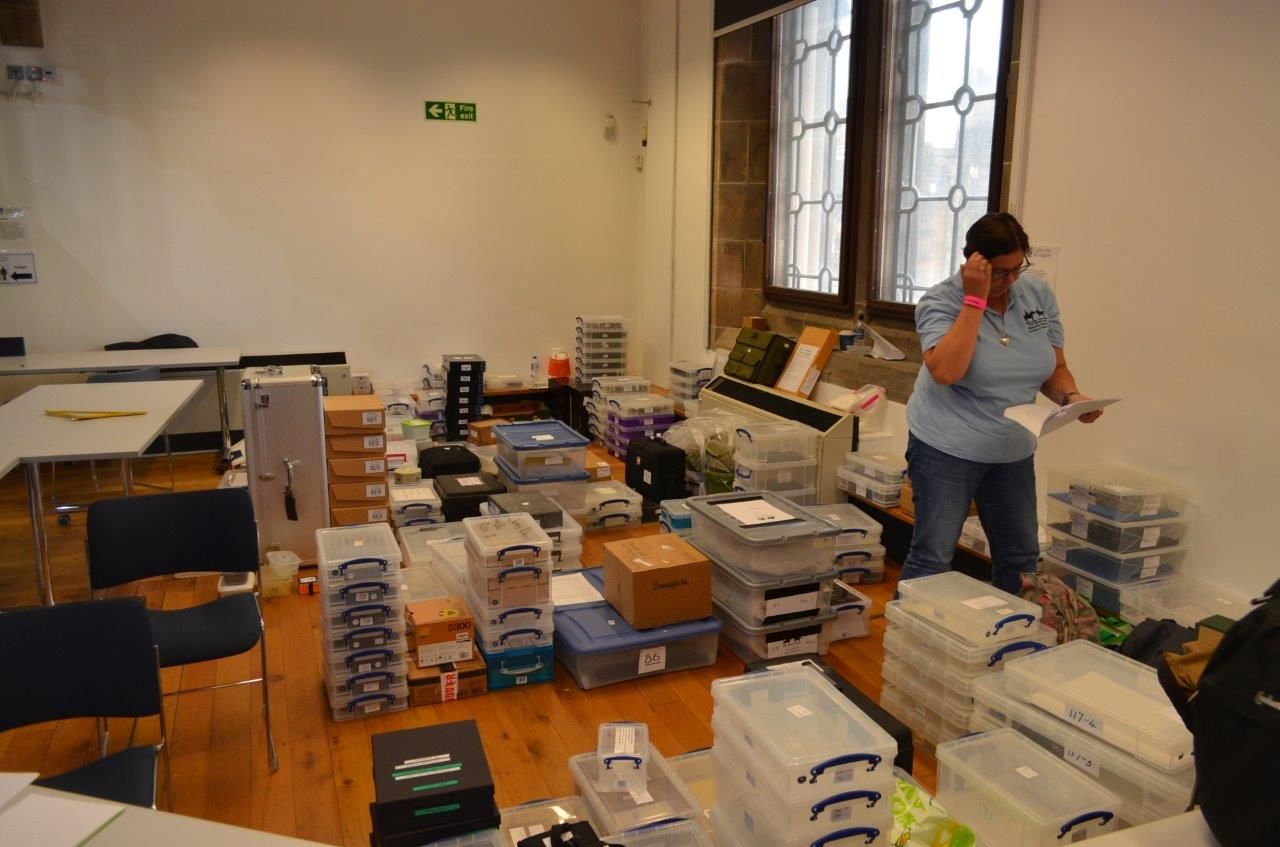
By the following day there were hundreds of boxes...well done to the team that managed this.
That afternoon and the following morning I was able to sneak in and get some pictures before the crowds arrived. Each brigade and division had a card denoting its starting position on the table. The Prussians are massed on tables at the back of the room
 |
| The Prussians (one of two tables) |
 |
| The French started to arrive |
You might notice the colours of the tshirts - blue for French, Red for Allies, Green for Prussians, and White for Umpires
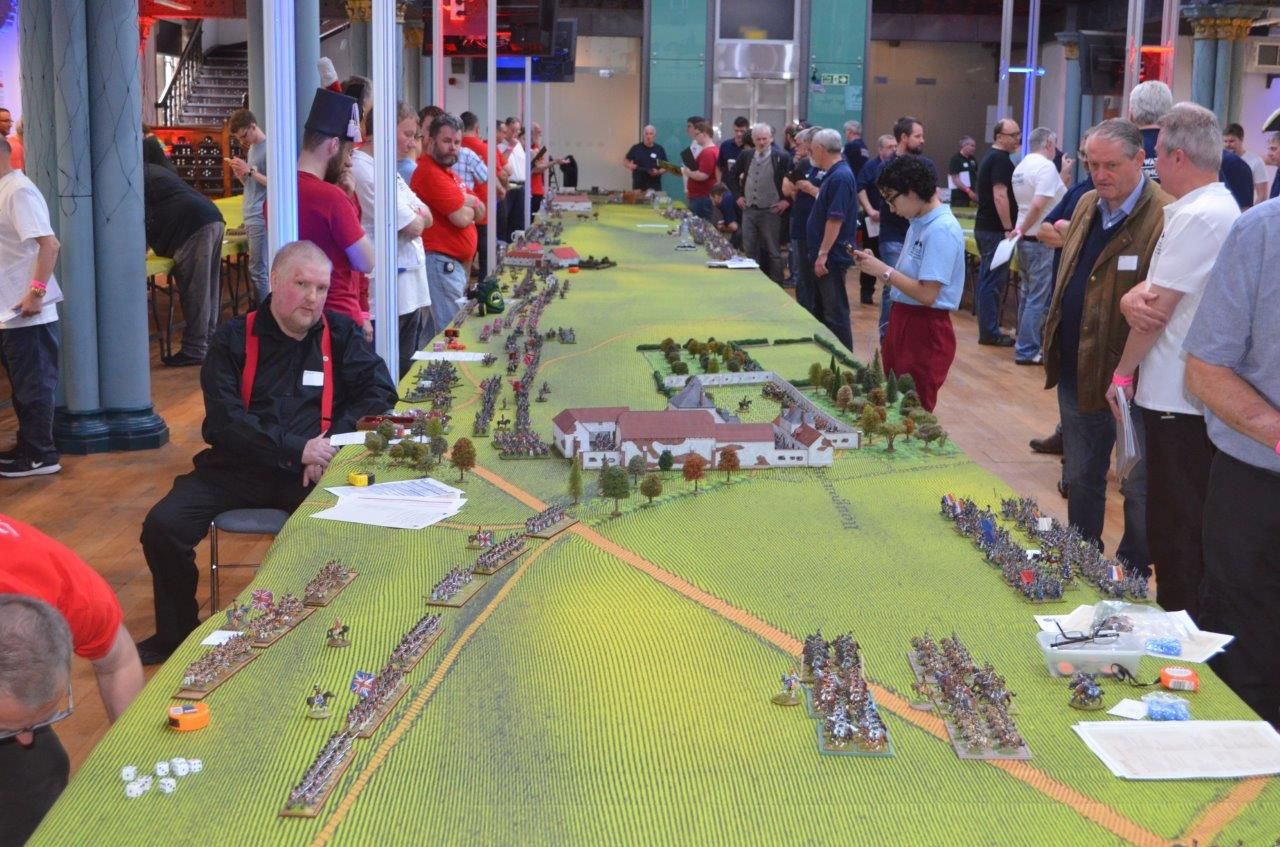 |
| There is an historical fiction writer in this picture and I think he was quite impressed that I I had read his books |
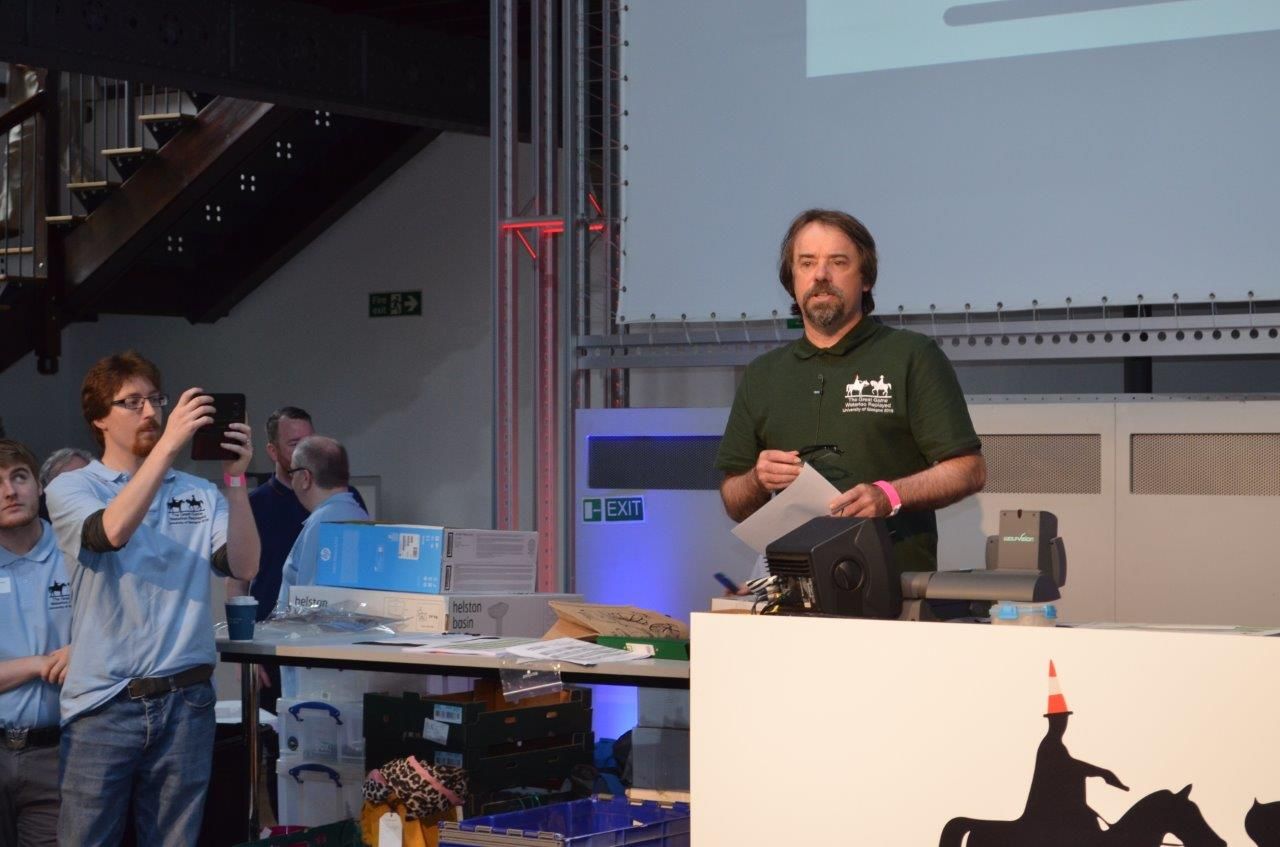
The players briefing by Tony Pollard on day 1
Tony has been taking pictures of Napoleon's command stand all round the world over the past year - managed to get him to pose for a picture of it at the game itself
The Reenactors
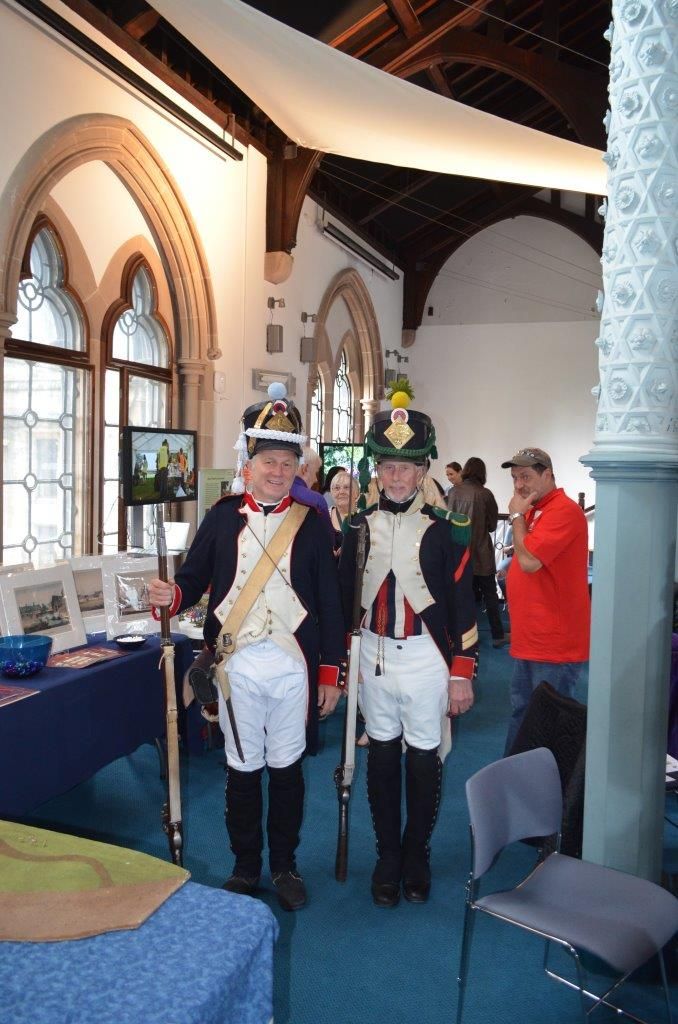 |
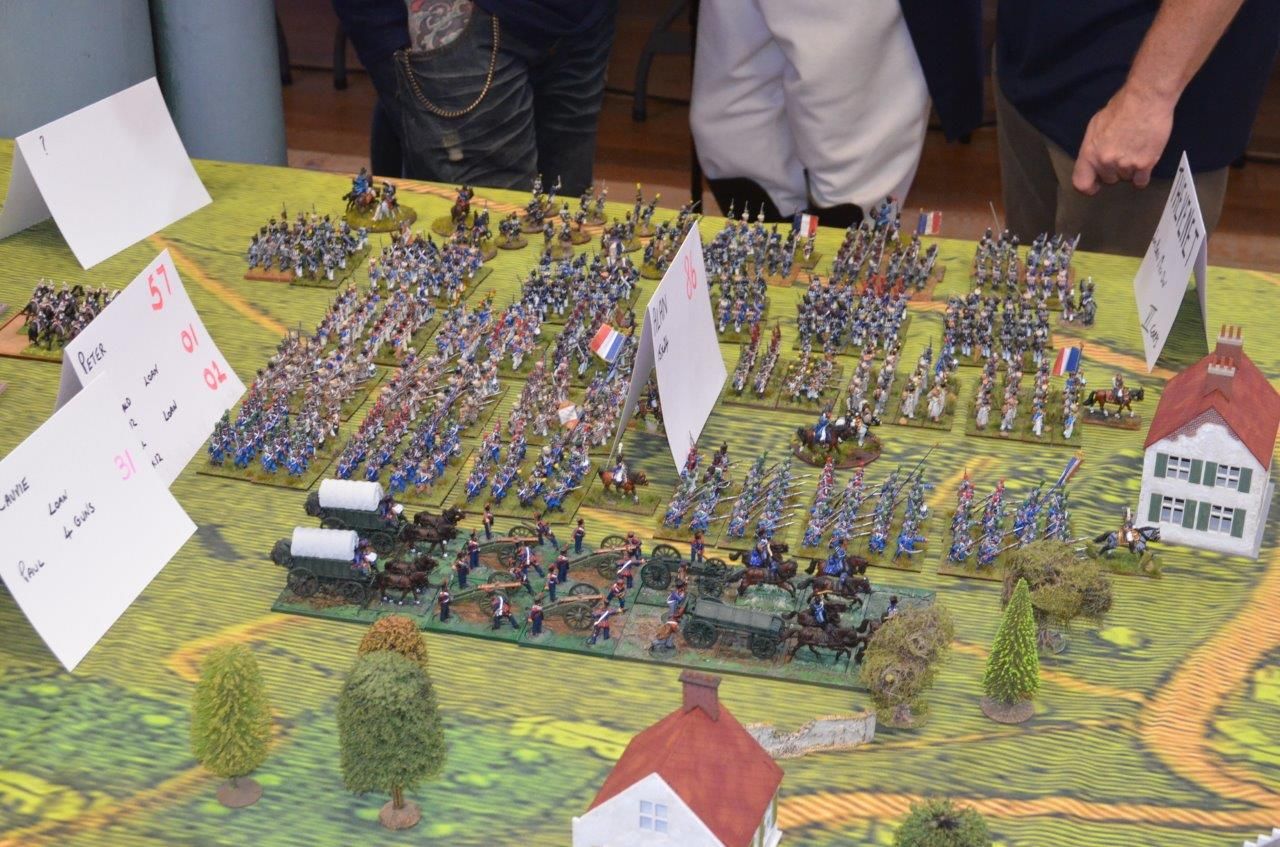
| The French |
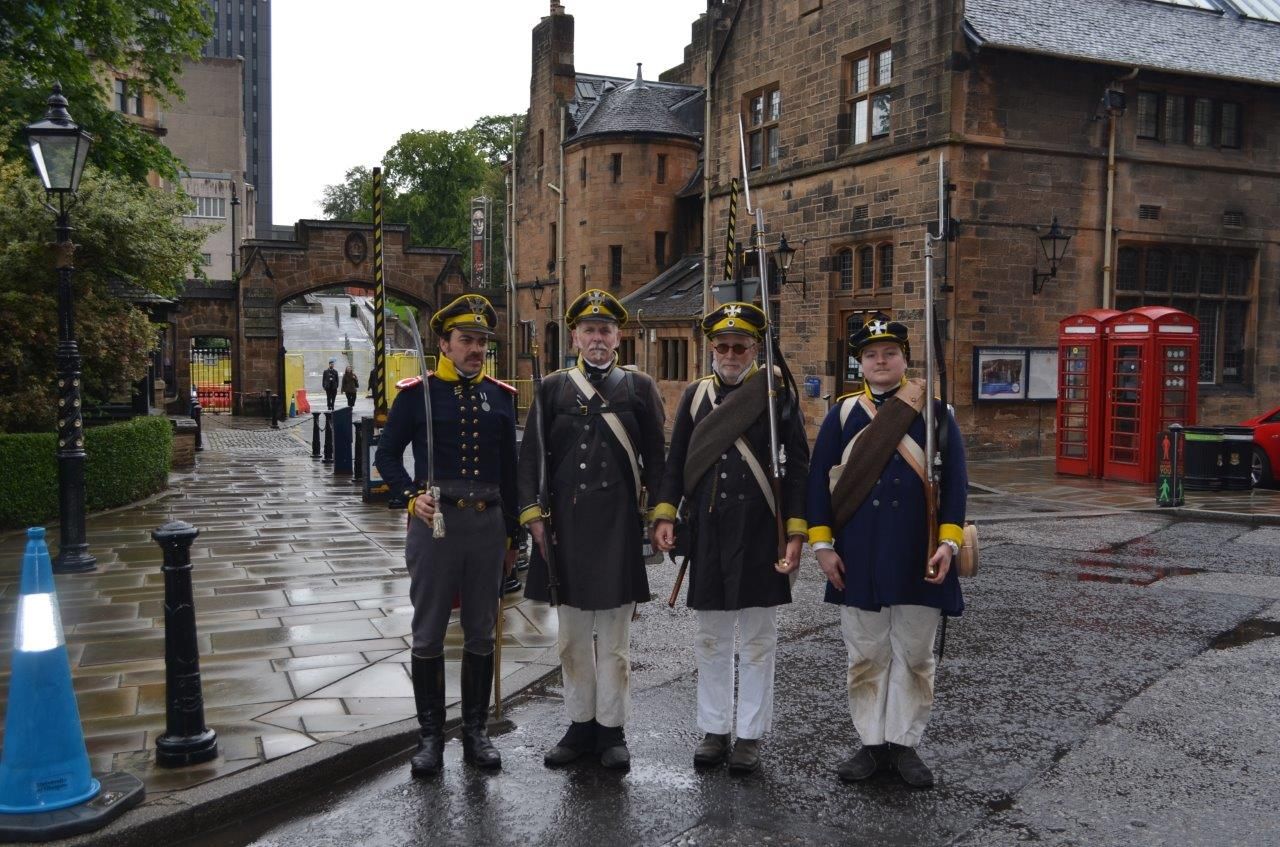 |
| The Prussians |
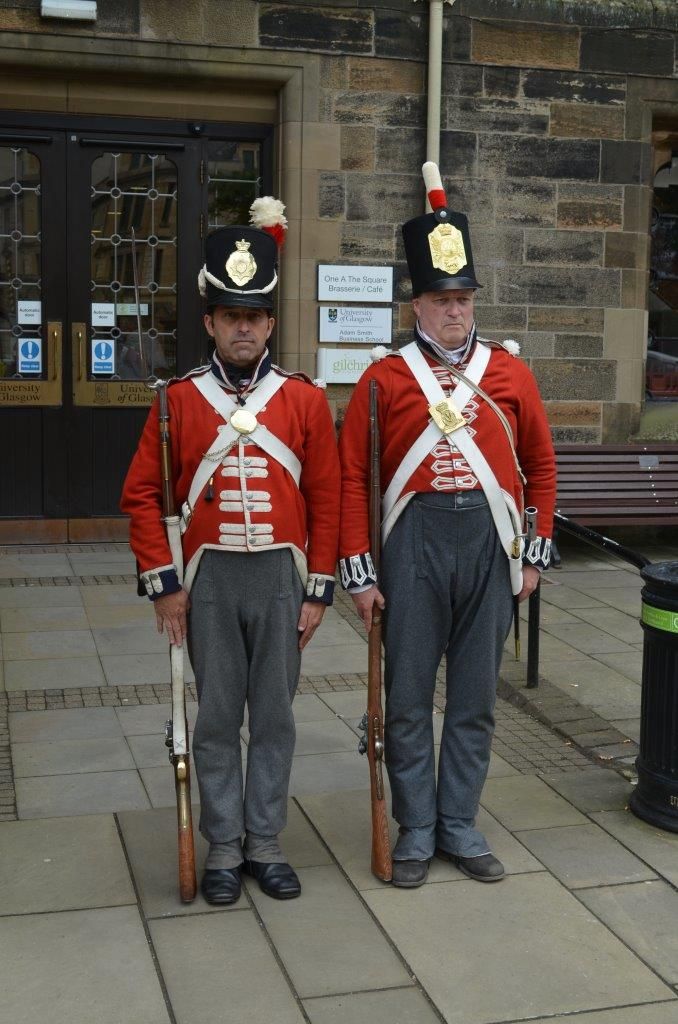 |
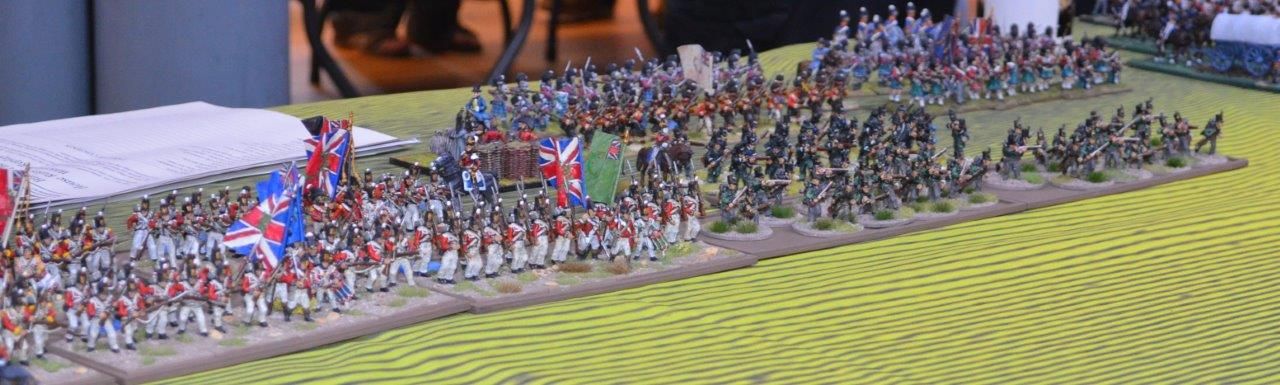
| The British |
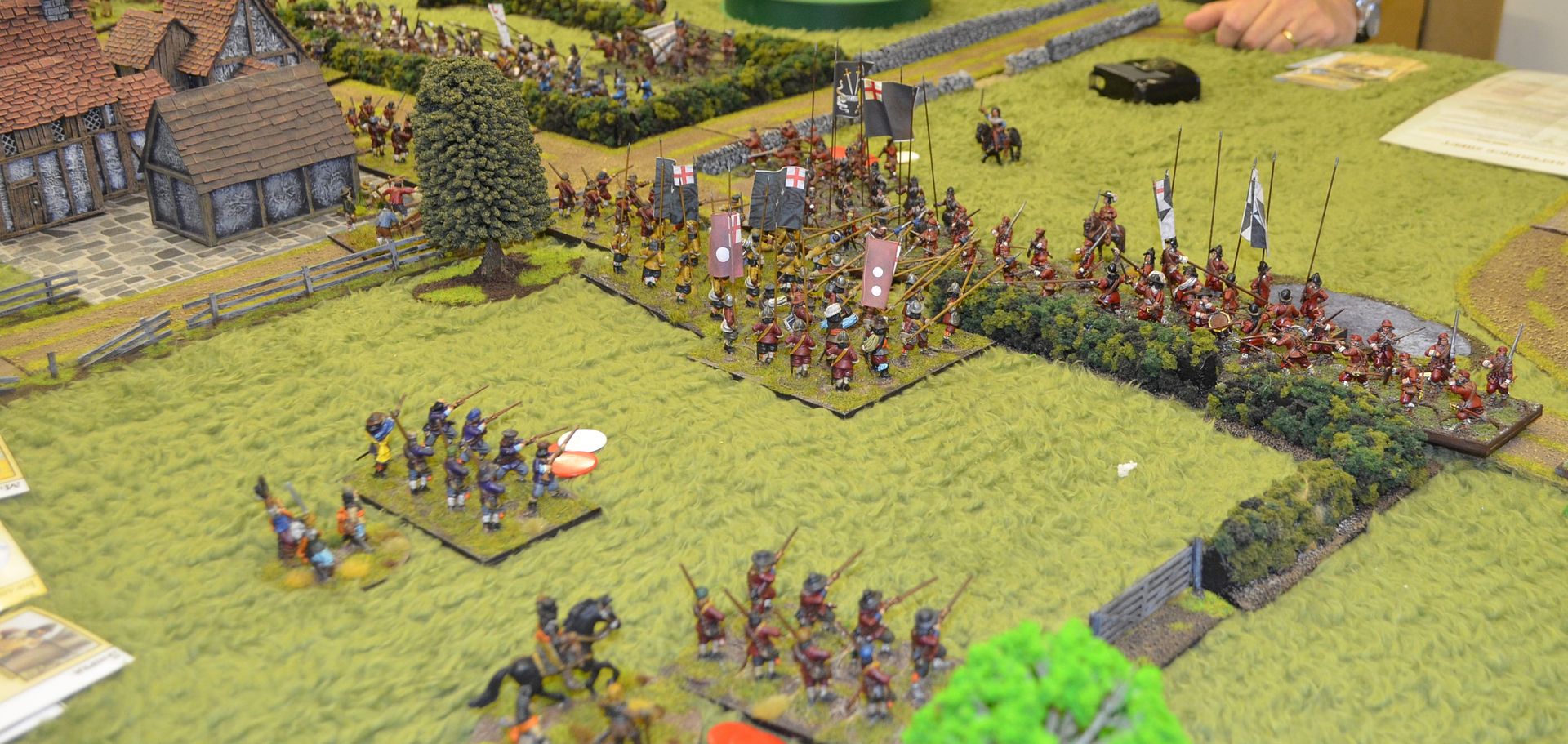
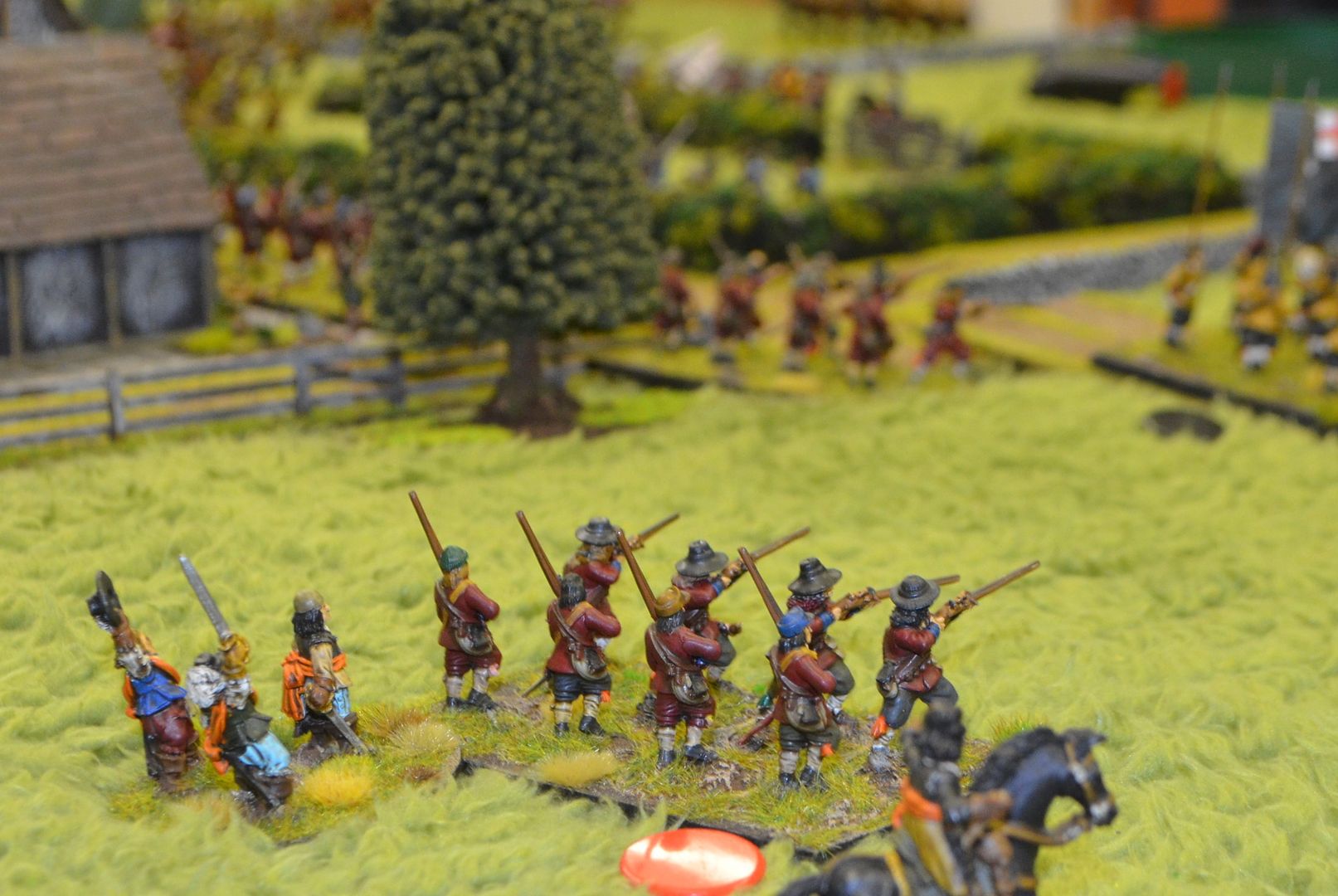
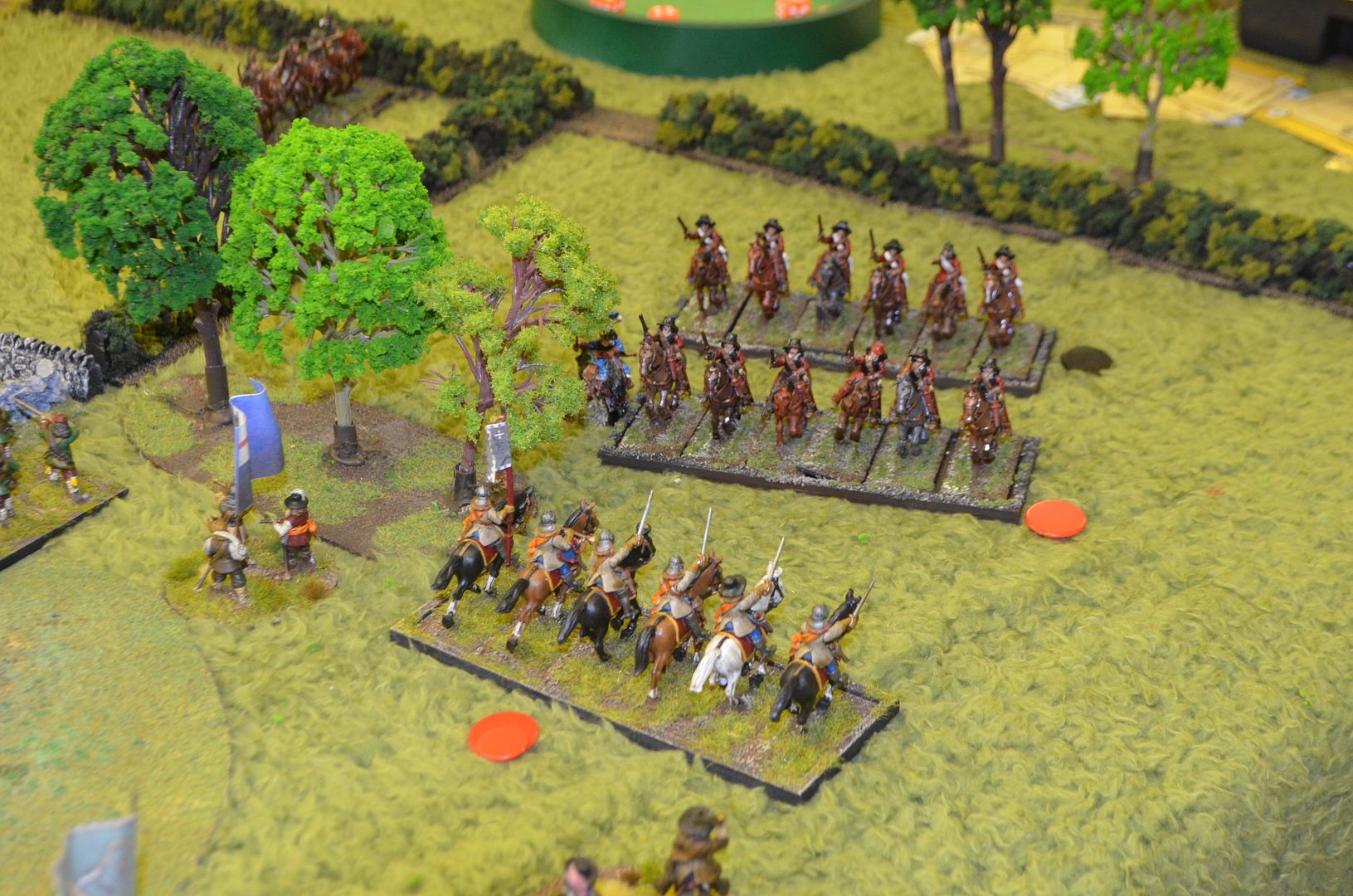
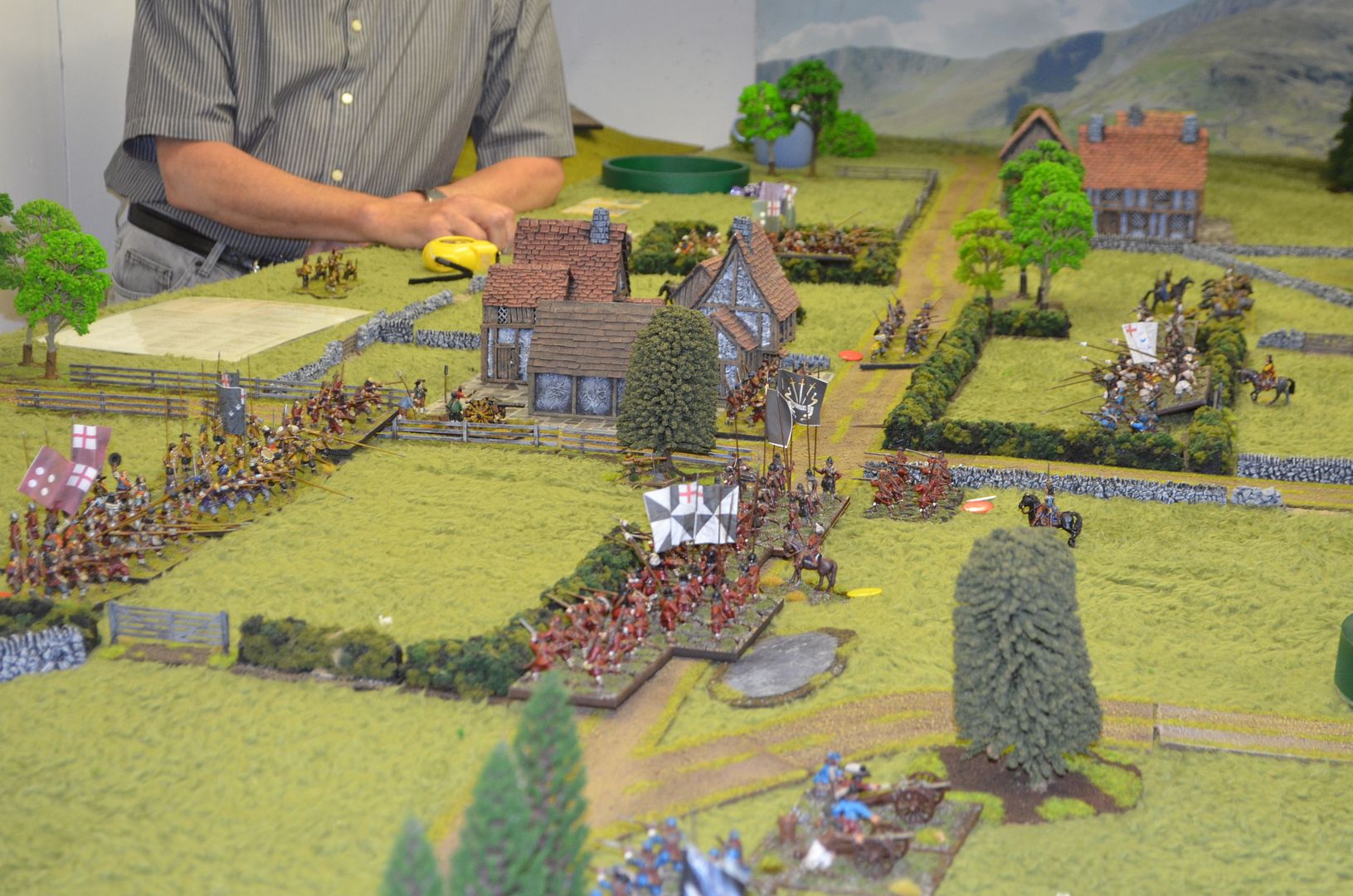
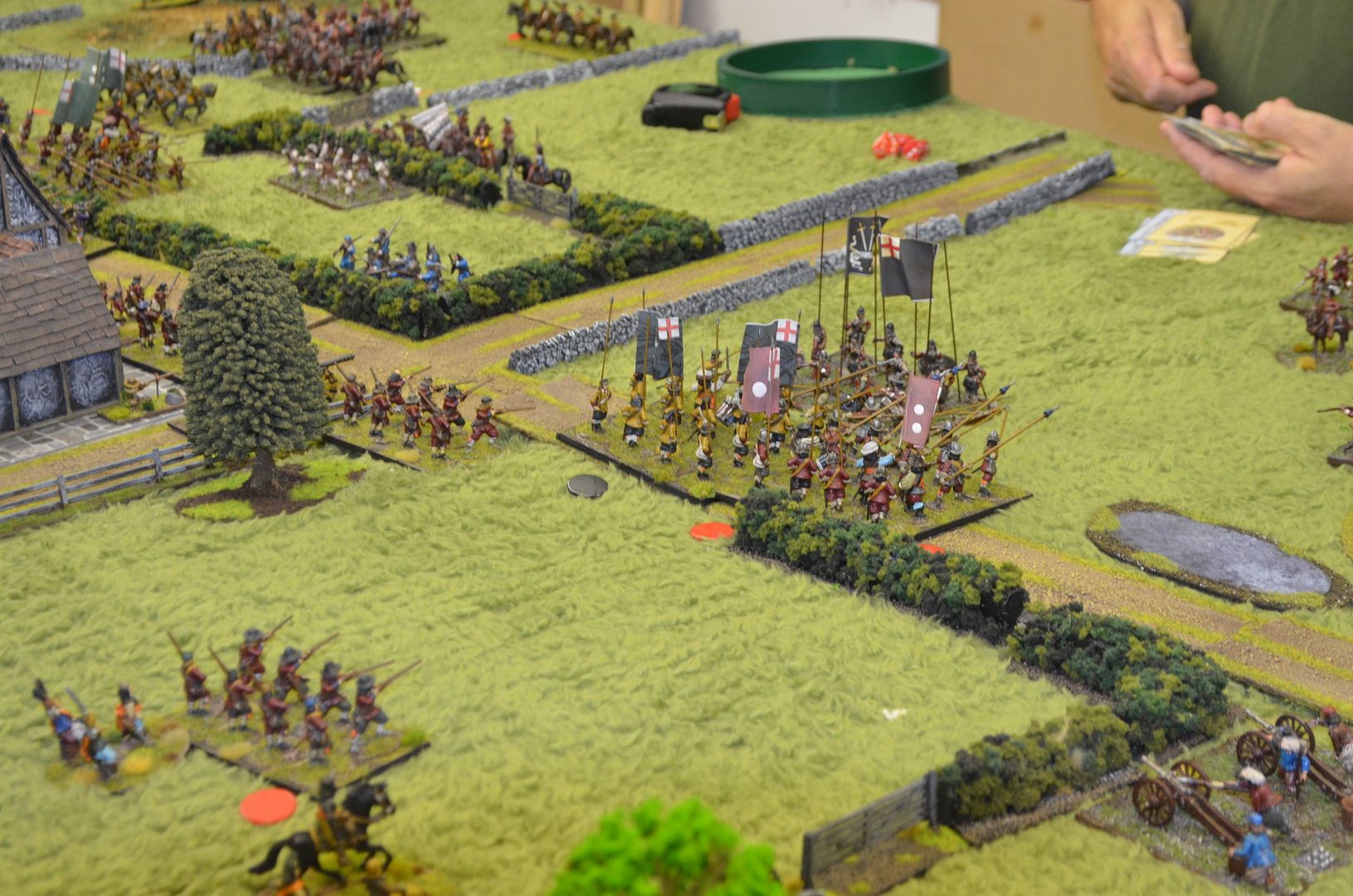
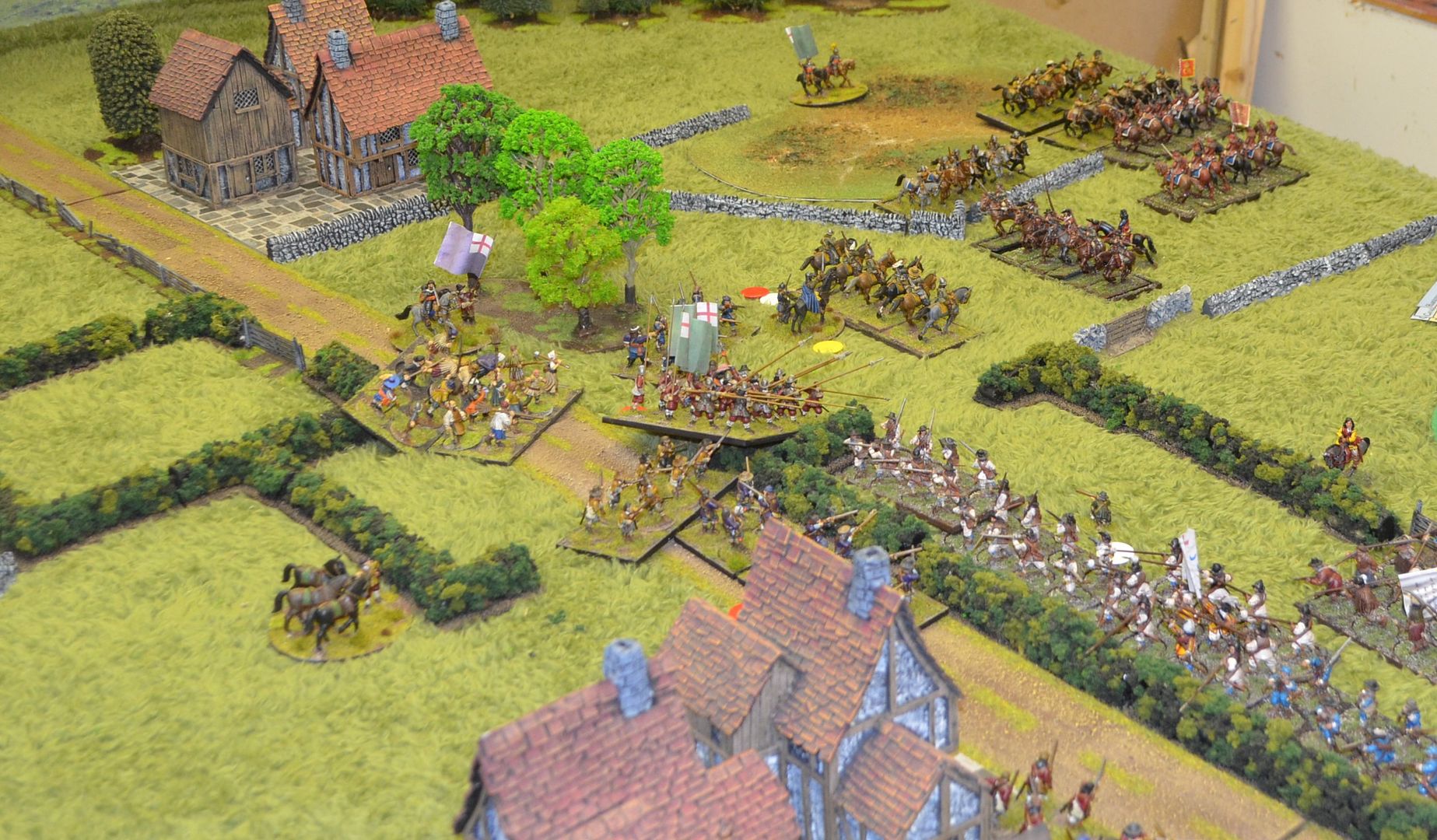
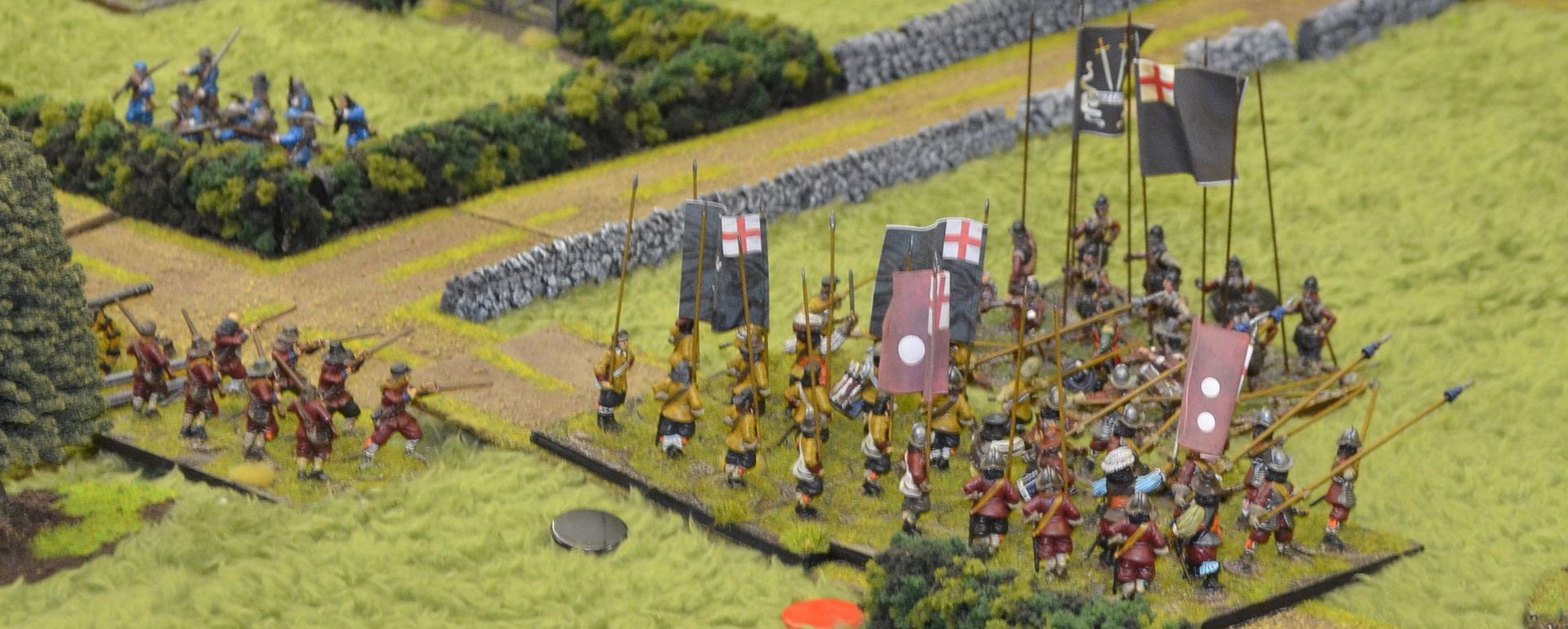
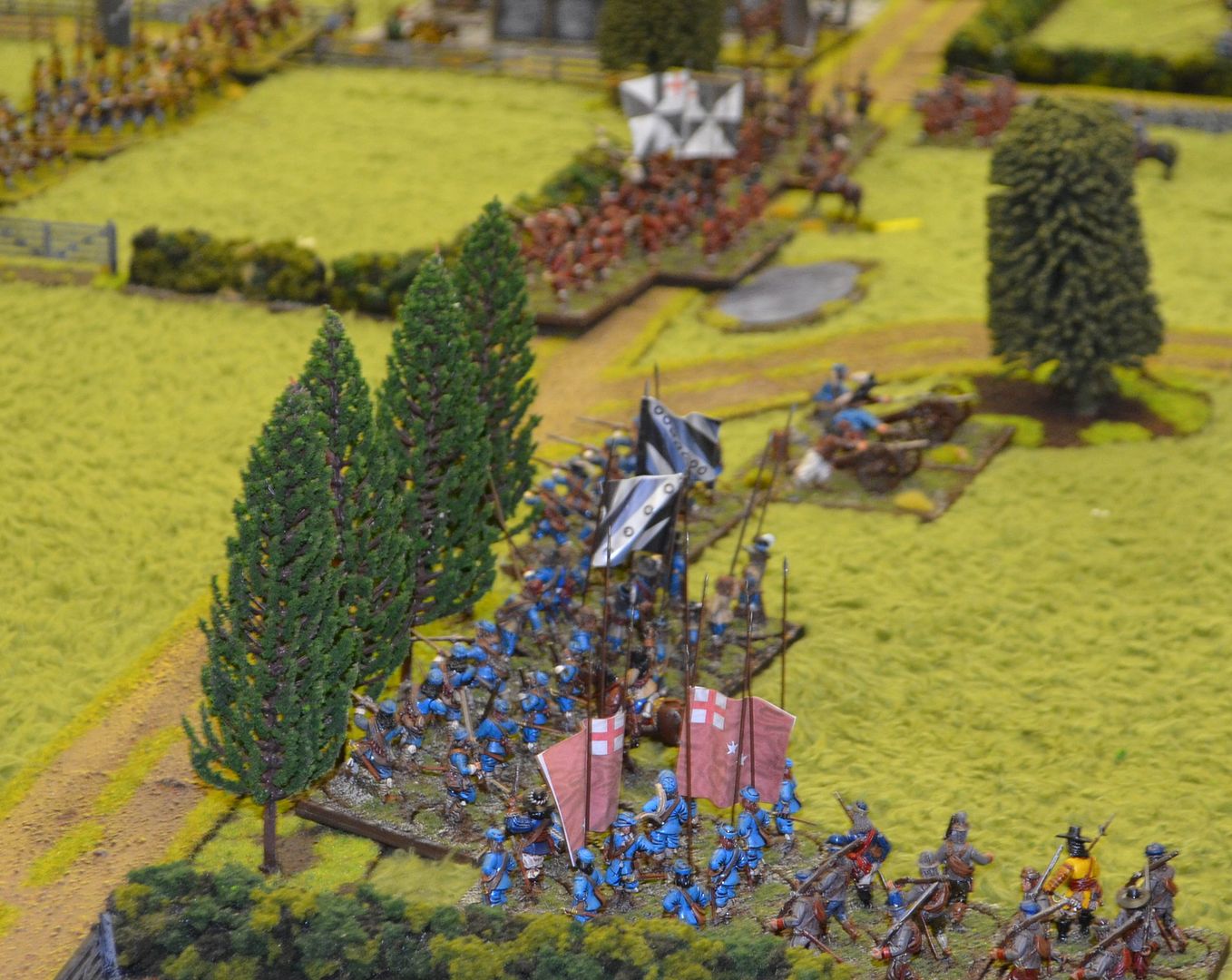
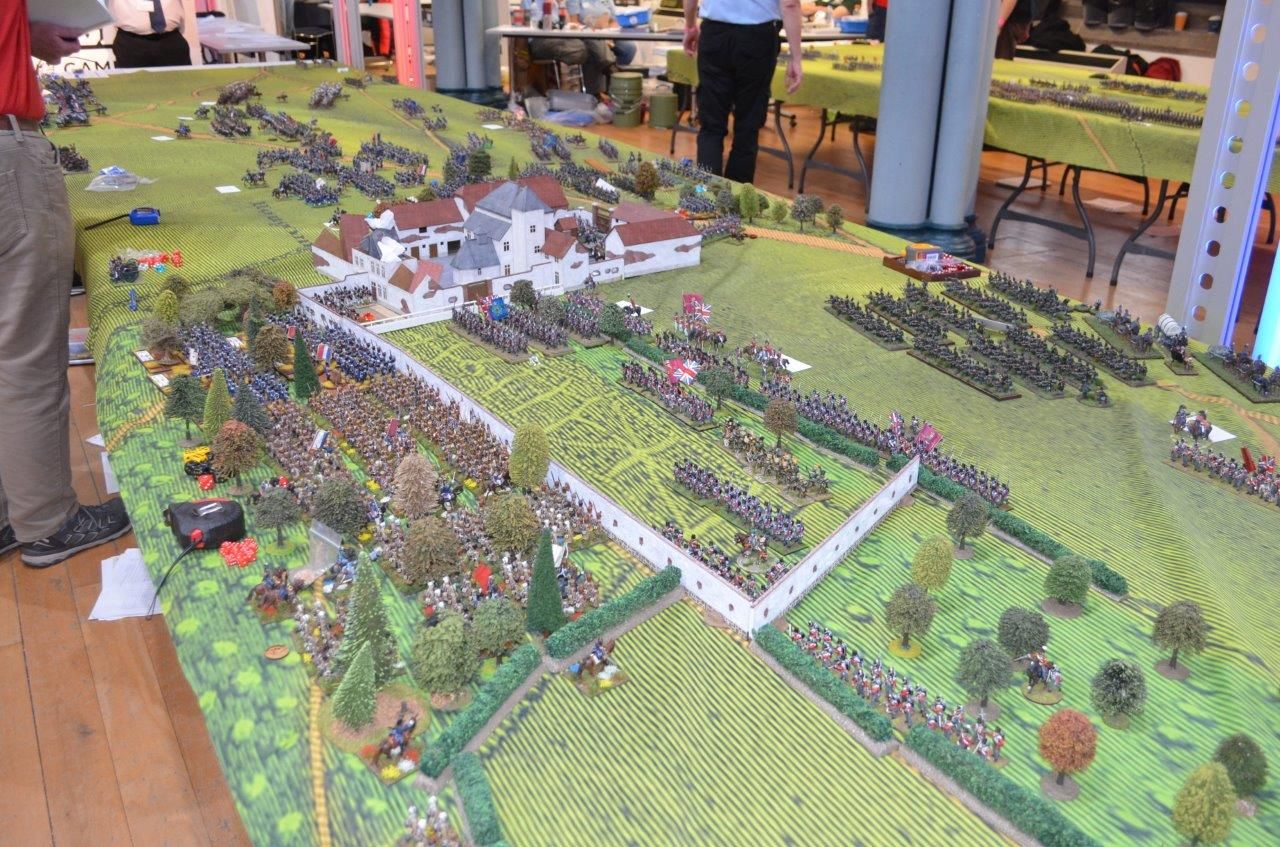
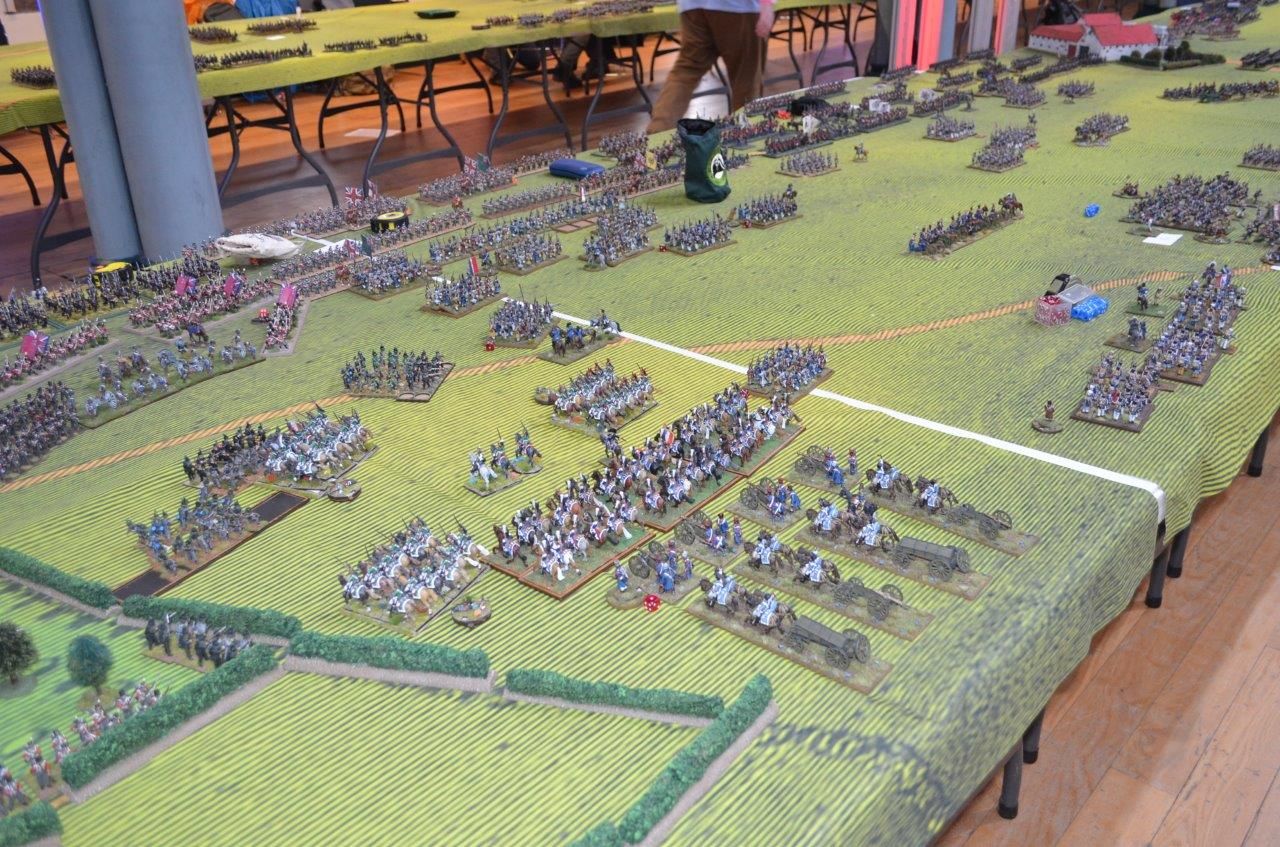
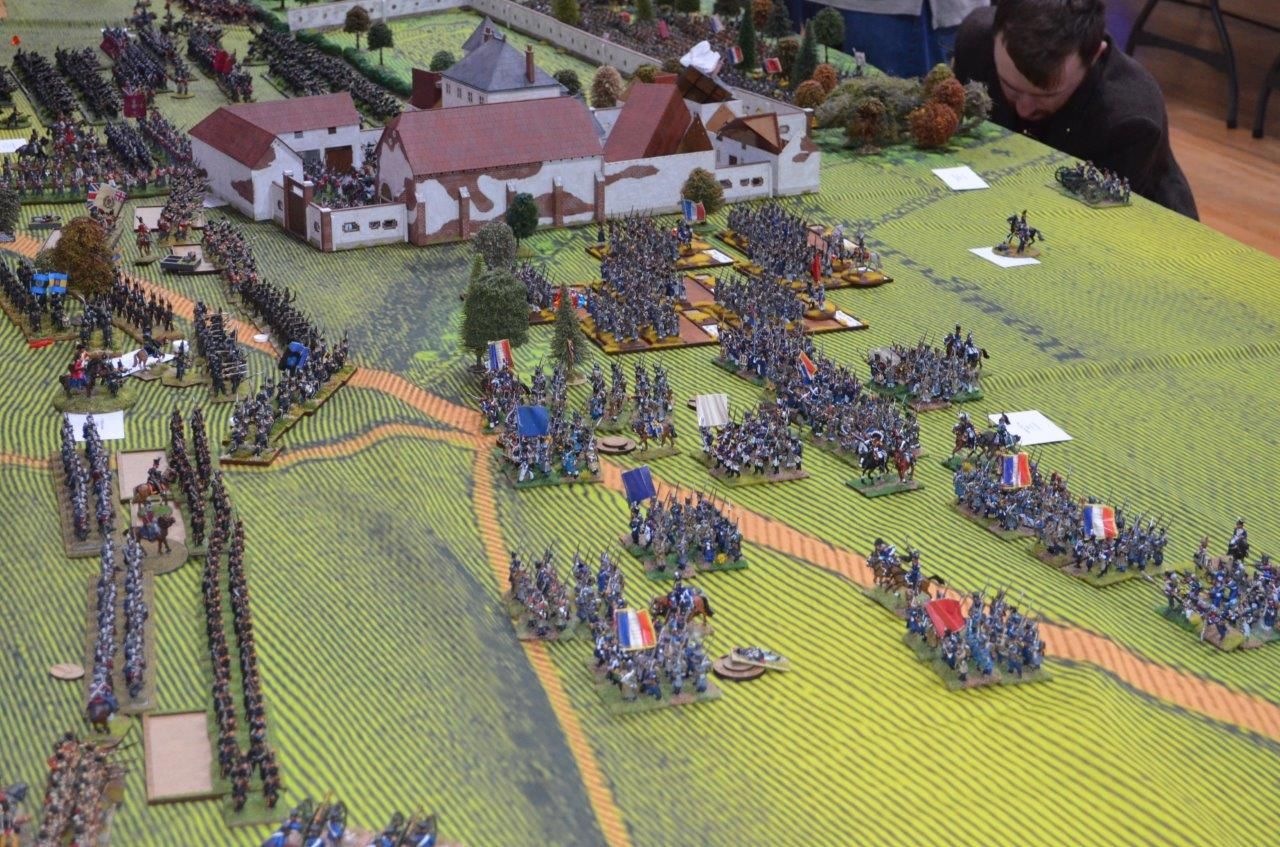
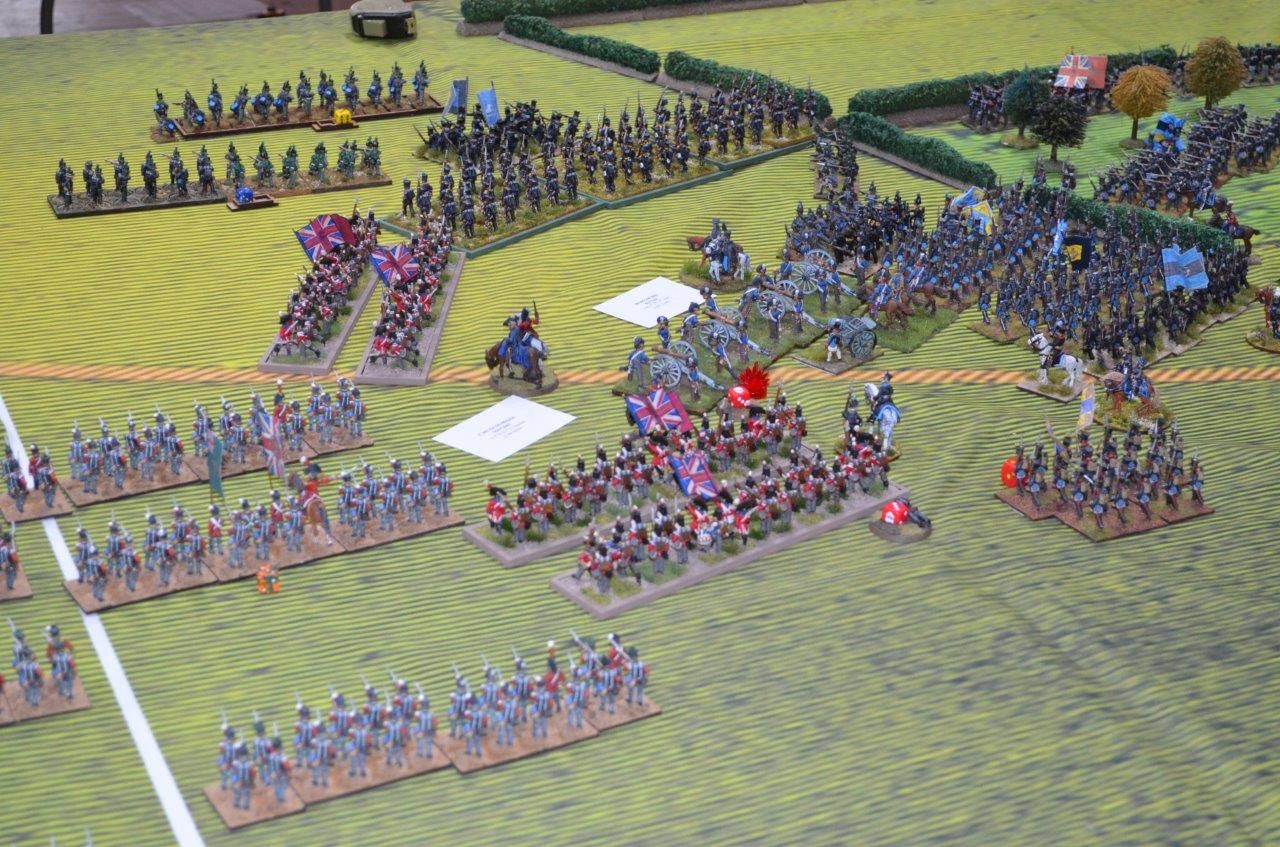
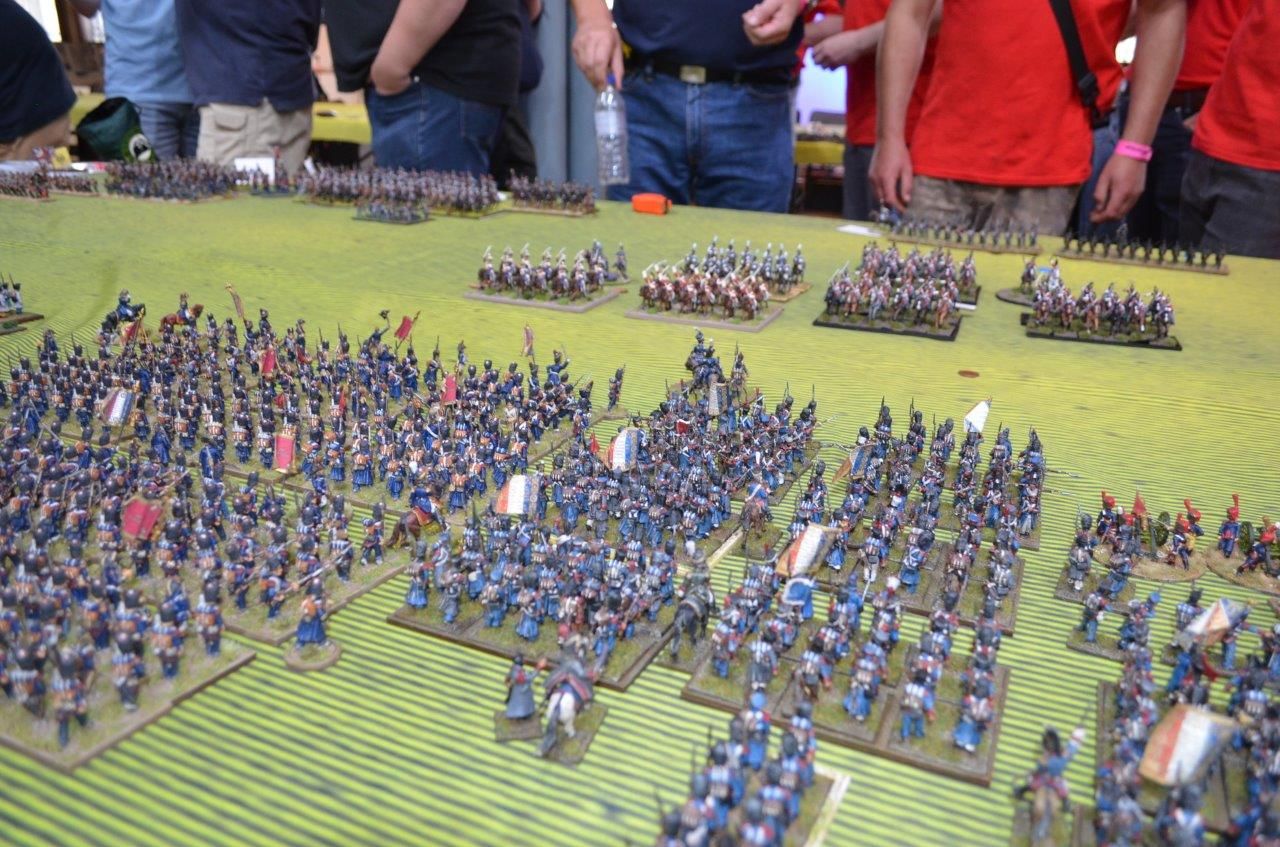
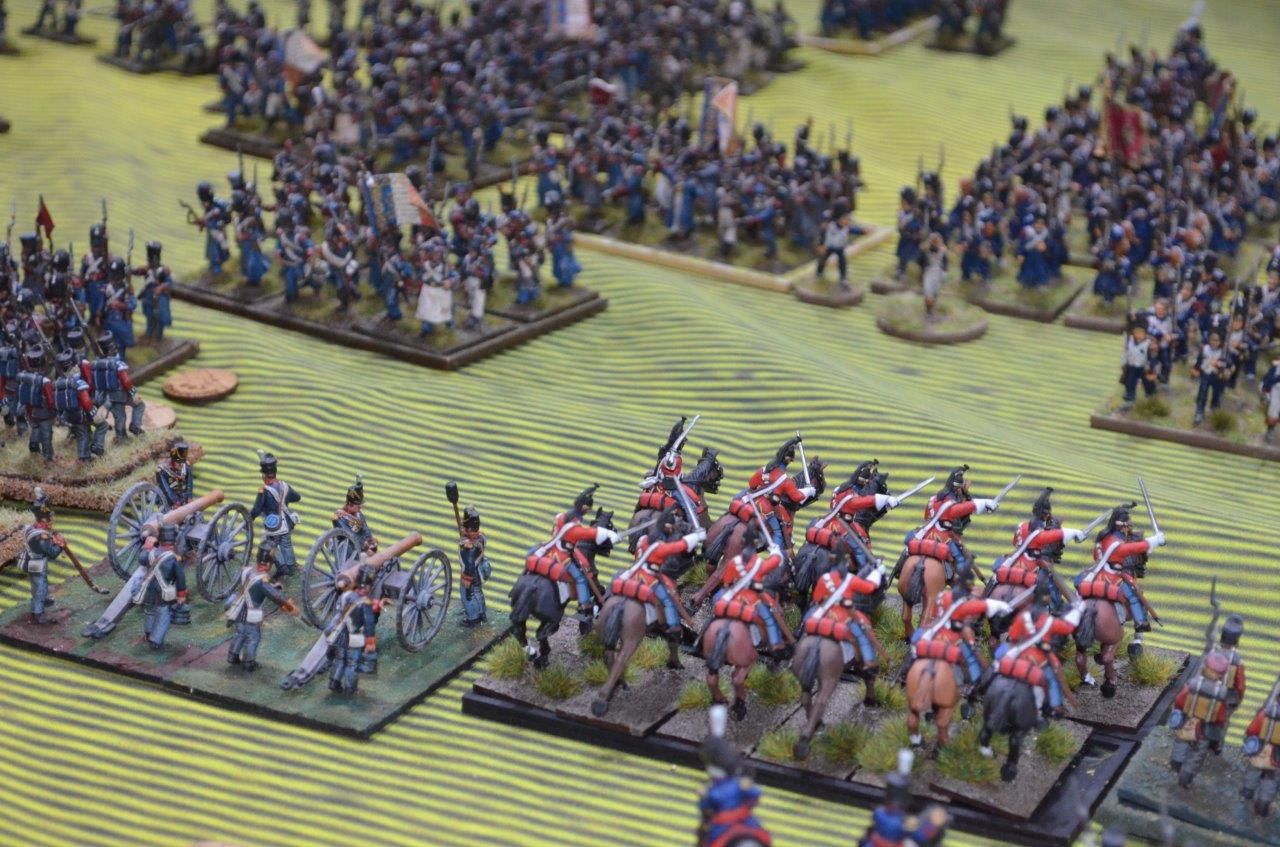
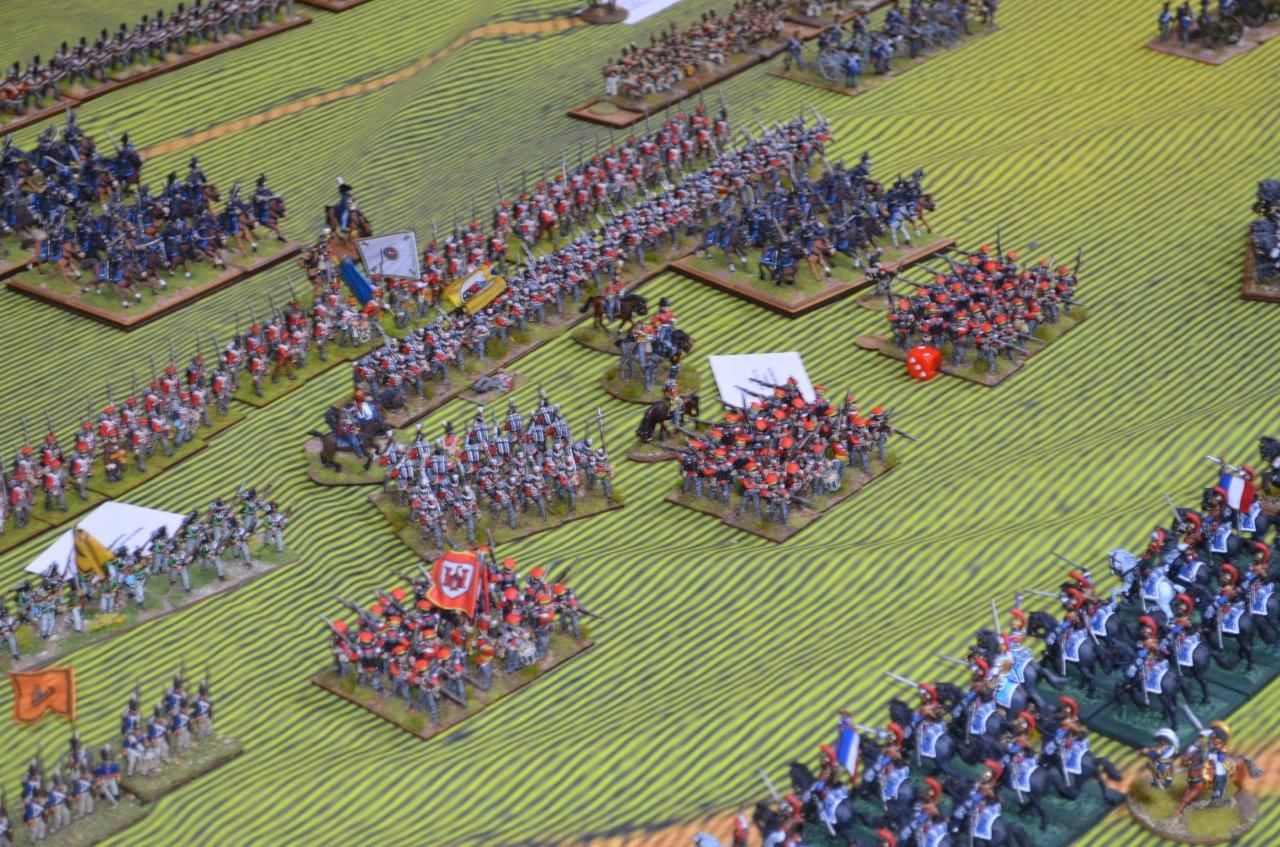
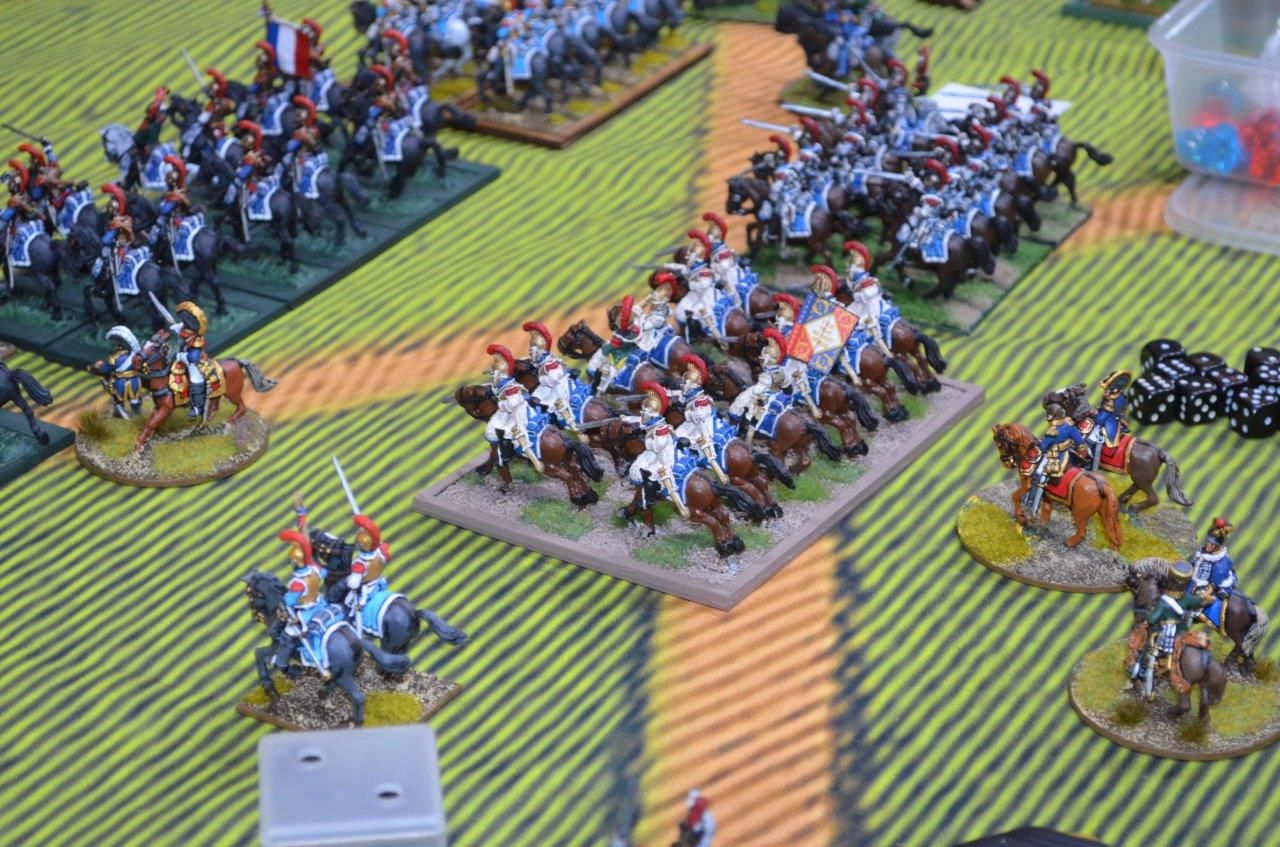
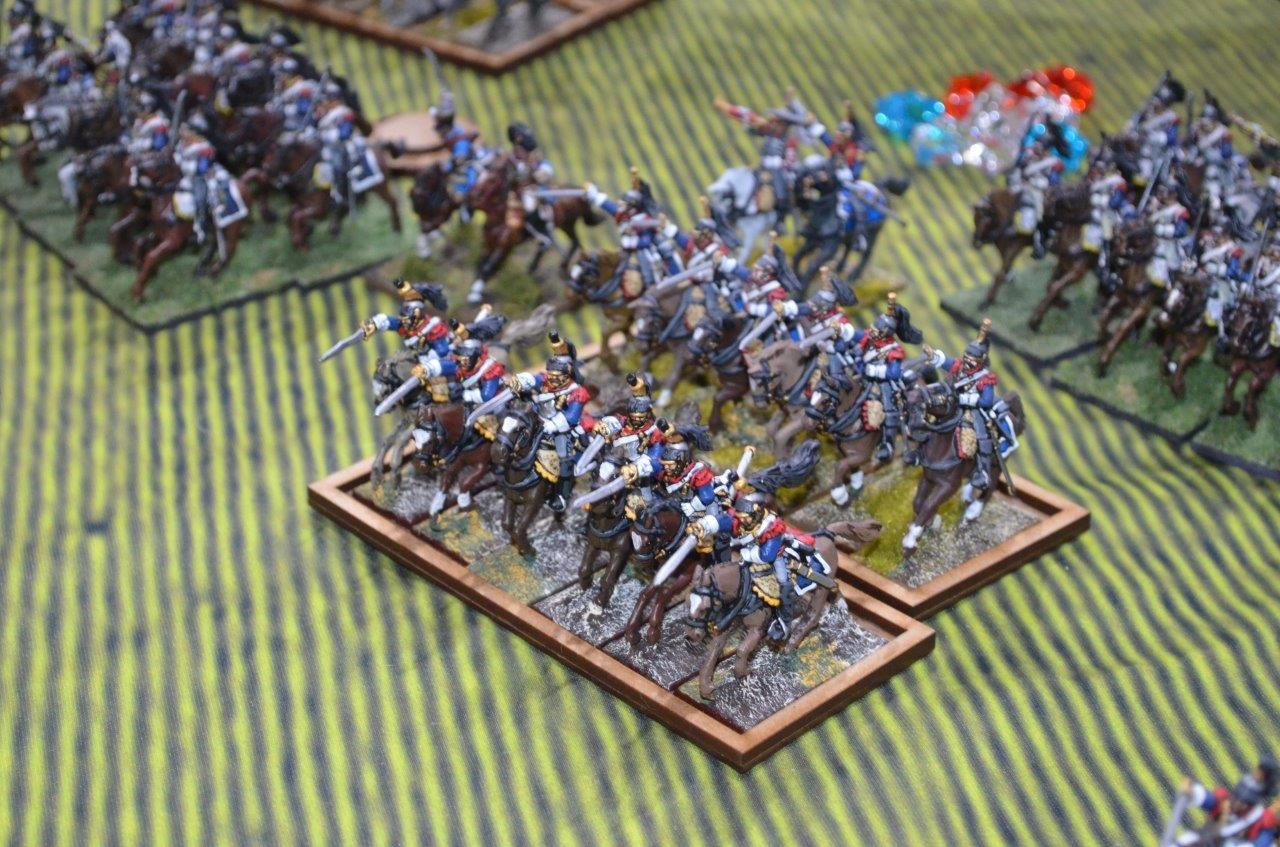
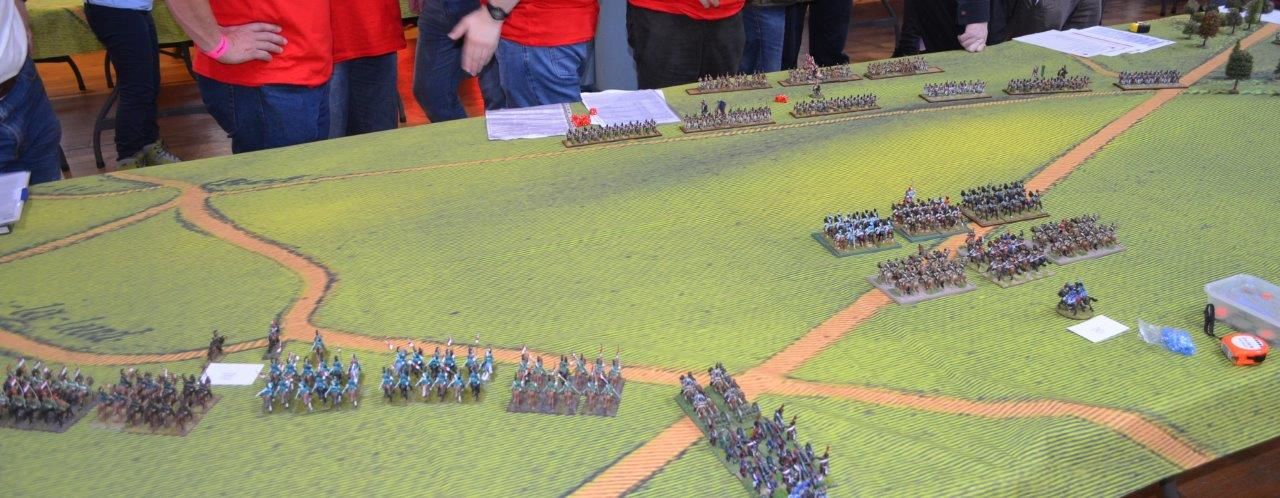
The Great Game
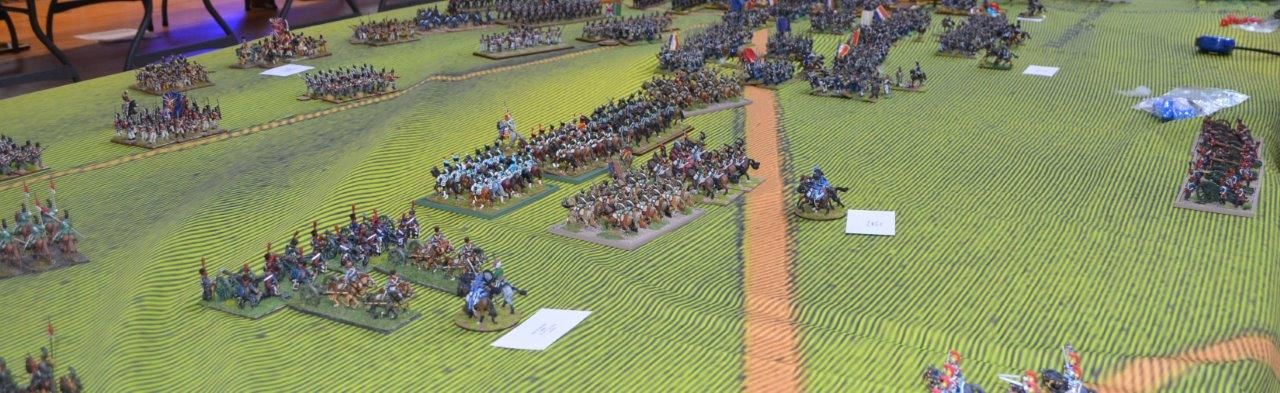
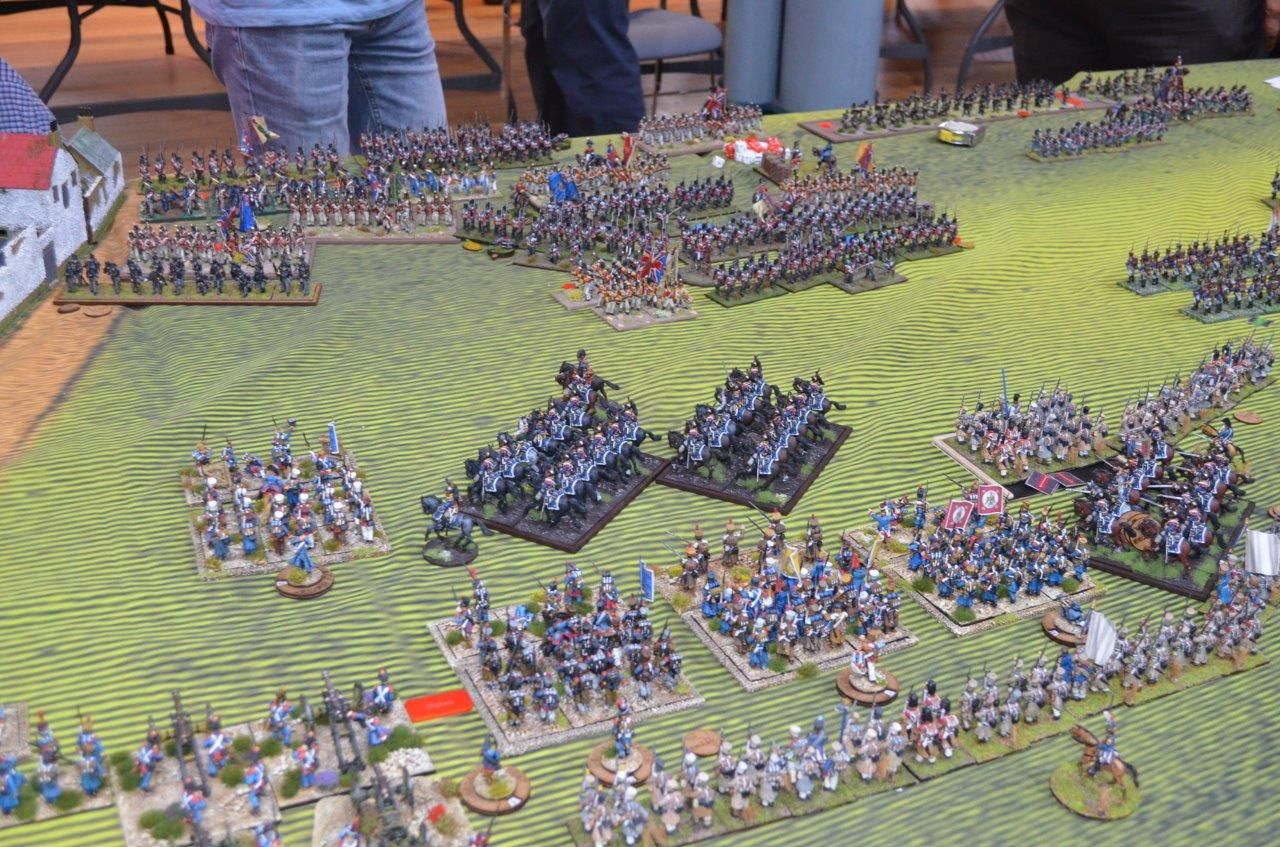
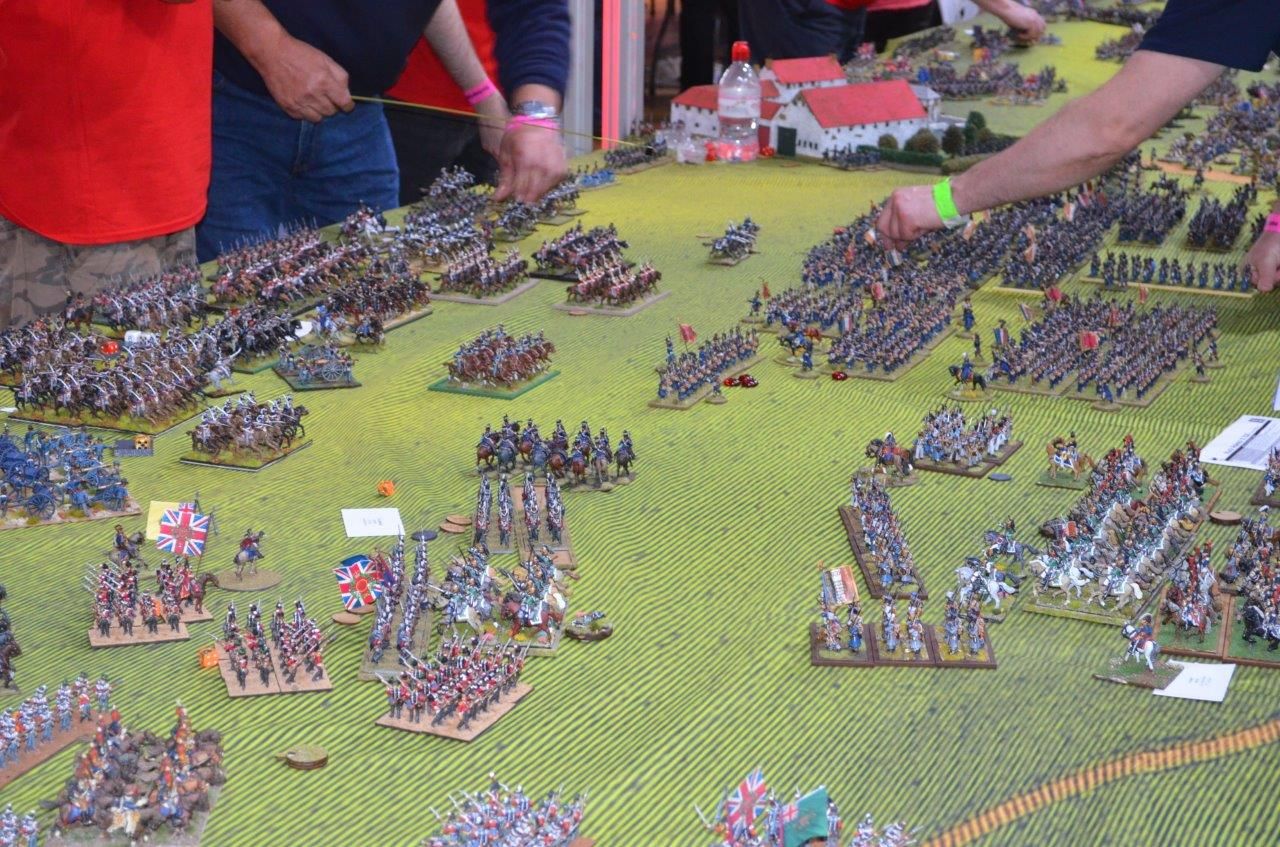
All the following pictures are of the Great Game
 |
| Add caption |
Some of these pictures were taken in the breaks when nobody was around
Close to the point where Napoleon Almost got captured
So what could be learned next time?
Black Powder (1 or 2 take your pick) is a great set of
rules, simple to use and learn and delivers a result. However there were tweaks
in the Great Game that caused some issues. The biggest of these was to ignore
the core rule of Shaken brigades. As the rules stand once a brigade has either
lost or had shaken more than 50% of its forces that unit effectively becomes
useless. In the great game this was effectively ignored and only once the
brigade was down to one effective unit would it retire from the field. This was
done to ensure that players were kept in the game. Sadly it ended up ensuring
an overpacked centre with little room for movement in an attritional battle for
frontage. Recommendation keep the rule as it is written and get players to
recognise that there commands could evaporate quite quickly. It’s the taking
part that counts.
Secondly the distances on the table were stretched and the
ruleset really struggled to cope in key areas. The actual battlefield is no
more than three miles across and a man on a horse could cover this in less than
20 minutes. In an ideal world troops deployed on the far left should have been
able to strategically move across the rear tables to the far right and vice
versa. This was not considered and we ended up with a perverse scenario that it
would have taken more than two days of gaming to order a unit successfully from
east to west. It was less of an issue when attacking to the front but it did
mean very little tactical movement in the game. Effectively you could only attack
what was in front of you. Combine this with point 1 above and you end up with
stalemate. When the French broke through into the Allied rear on Sunday morning
they had no opportunity to exploit their success with reinforcements.
Unfortunately the gaming battlefield was completely flat but
as any proponent of Waterloo would know it is an undulating battlefield with
hills, crests, valleys and rises. These were printed on the map but extremely
difficult to read and quite rightly the judging team decided to forego these
features. We did however reach a compromise on where the key British ridge
would feature – the edge of one table. This worked in principal but might have
been better if the map was slid further to the south with the ridge occupying
the central part of the second row of tables. This could have been formed from
some simple sheets of polystyrene for little cost and place under the mat.
Sliding the map south would have also created ore action on table three
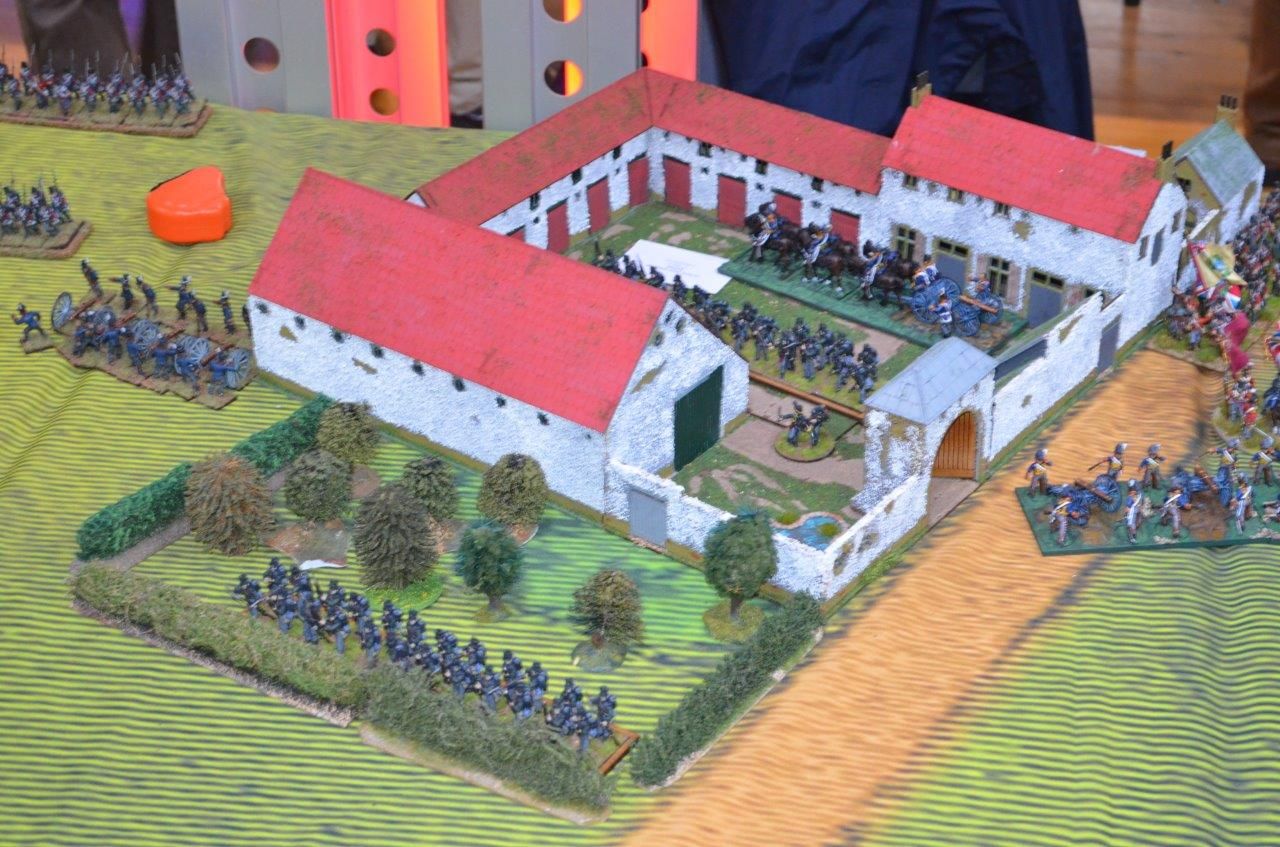
(hougoumont would have been on this table).
Finally the biggest weapon in Napoleons armoury was
hamstrung by the rules. At no pint could he have built an effective grand
battery. The 60” range given in Black Powder does not reflect the real ranges
of the artillery especially when compared to the 18unch ranch range of muskets.
For such a table I would have argued an increase in artillery ranges.
Did these issues impact the game – in part yes – despite
arriving early the Prussians could never bring their full weight to bear on the
French and with no rapid deployment of reserves commanders could only really
react to what was happening in front of them.
That said, it was a fine game to
watch and I know all participants had a great time.
Once again a big thank you to the organisers...
Until next time..